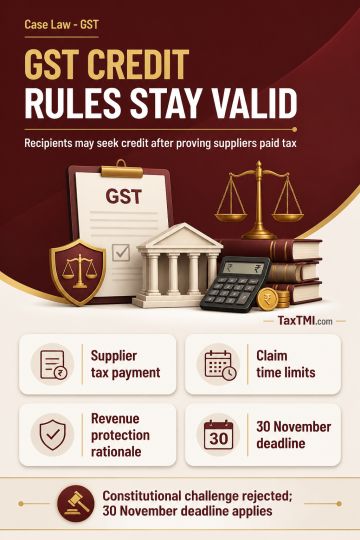
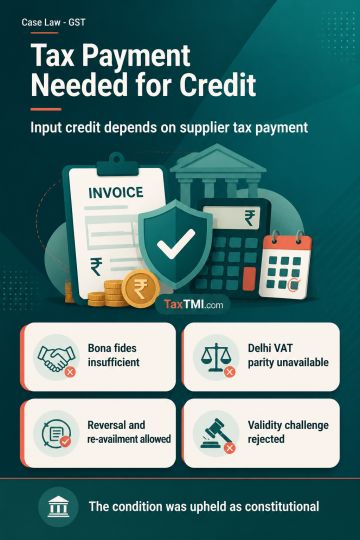
Input tax credit conditions remain constitutionally valid, with eligible recipient claims considered under GST circulars and retrospective filing dead...
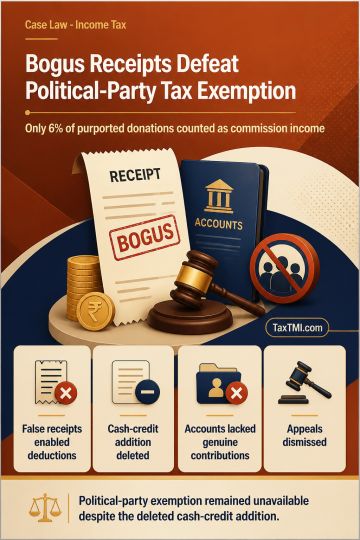
Bogus donation receipts justified commission income assessment and defeated political-party tax exemption for inaccurate accounts and reporting failur...
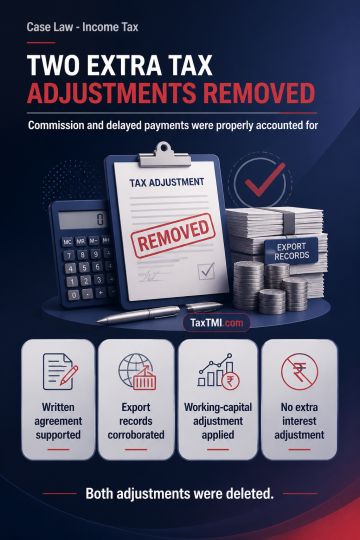
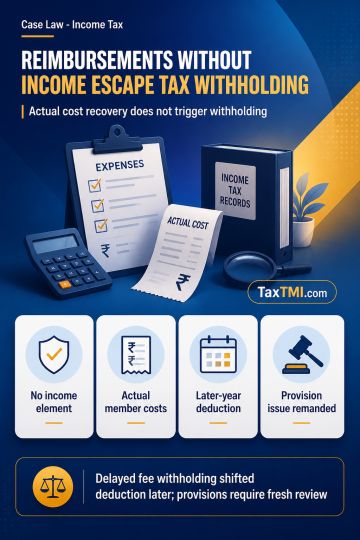
Pure reimbursement without income element escapes tax withholding, while delayed withholding and unsupported provisions face deferred or renewed scrut...
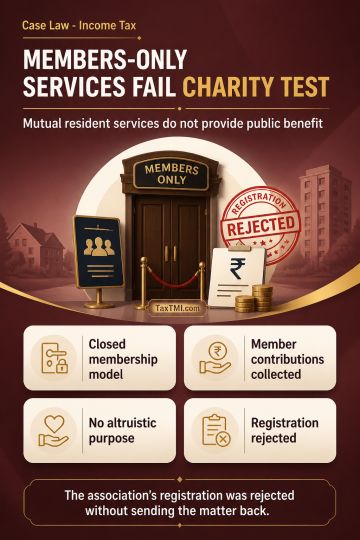
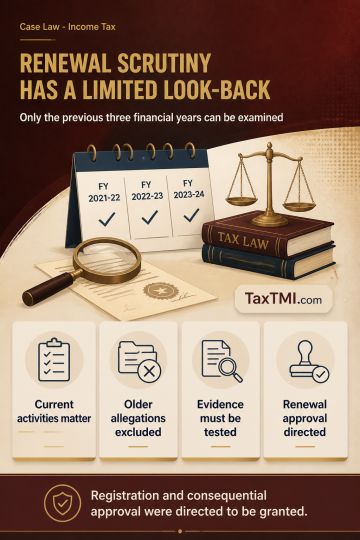
Public benefit requirement defeats charitable registration where residents' association services are reciprocal, member-only facilities governed by mu...
Exempt-income expenditure disallowance is confined to investments that actually generated exempt income, while supported business expenses remain dedu...
Insolvency and BankruptcyAugust 8, 2024Case LawsAT
The case assesses the statutory construct of IBC regarding demand notices u/s 9. A dispute arose over payment to Respondent No. 2 by the Corporate Debtor, with a notice of dispute issued. The disputes, including changes in roles and responsibilities, impacted the debt claimed by Respondent No. 2. Pre-existing disputes surrounding the debt indicated it was not undisputed, making CIRP initiation inappropriate. The Adjudicating Authority erred by not considering the plausibility of disputes. The Section 9 application was wrongly admitted, leading to the release of the Corporate Debtor from CIRP. The Resolution Professional's fees are upheld, and the deposited amount is to be refunded. NCLAT allowed the appeal.
The case assesses the statutory construct of IBC regarding demand notices u/s 9. A dispute arose over payment to Respondent No. 2 by the Corporate Debtor, with a notice of dispute issued. The disputes, including changes in roles and responsibilities, impacted the debt claimed by Respondent No. 2. Pre-existing disputes surrounding the debt indicated it was not undisputed, making CIRP initiation inappropriate. The Adjudicating Authority erred by not considering the plausibility of disputes. The Section 9 application was wrongly admitted, leading to the release of the Corporate Debtor from CIRP. The Resolution Professional's fees are upheld, and the deposited amount is to be refunded. NCLAT allowed the appeal.
Note: It is a system-generated summary and is for quick reference only.
 TaxTMI
 of 4786





 Join Channel


 TaxTMI