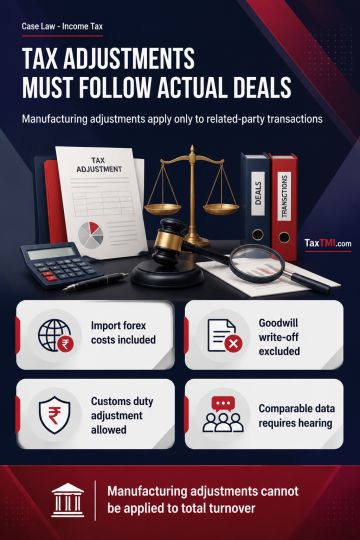
International transaction benchmarking restricts transfer pricing adjustments to associated-enterprise dealings, while functional comparability govern...
Joint development agreements defer taxable transfer where possession lacks part performance, while completed flats determine consideration and exempti...
Passenger baggage re-export requires true declaration and cannot be granted indirectly through discretionary redemption of undeclared prohibited goods...
The case involves the statutory interpretation of Entry 41 of Schedule II of the Act regarding the classification of a product as a medicated ointment. The court emphasized harmonizing inclusive and exclusive clauses in legislative provisions. Entry 41 aims to classify products based on medicinal properties, with medicated ointments receiving favorable tax treatment. The use of "but" in the entry indicates an exception for medicated ointments. The Revenue failed to disprove the product's classification, highlighting the importance of meeting the burden of proof. The court cited precedents emphasizing the Assessee's favorable interpretation in charging sections. The Tribunal's classification of the product as a medicated ointment was supported by robust evidence, leading to the dismissal of revision petitions. The High Court's revisional jurisdiction is limited to questions of law, jurisdictional errors, or procedural irregularities, not factual re-inquiry. Perversity in decisions requires meeting legal thresholds with concrete evidence. The Tribunal's decision was supported by substantial evidence, justifying the dismissal of revision petitions.
The case involves the statutory interpretation of Entry 41 of Schedule II of the Act regarding the classification of a product as a medicated ointment. The court emphasized harmonizing inclusive and exclusive clauses in legislative provisions. Entry 41 aims to classify products based on medicinal properties, with medicated ointments receiving favorable tax treatment. The use of "but" in the entry indicates an exception for medicated ointments. The Revenue failed to disprove the product's classification, highlighting the importance of meeting the burden of proof. The court cited precedents emphasizing the Assessee's favorable interpretation in charging sections. The Tribunal's classification of the product as a medicated ointment was supported by robust evidence, leading to the dismissal of revision petitions. The High Court's revisional jurisdiction is limited to questions of law, jurisdictional errors, or procedural irregularities, not factual re-inquiry. Perversity in decisions requires meeting legal thresholds with concrete evidence. The Tribunal's decision was supported by substantial evidence, justifying the dismissal of revision petitions.
Note: It is a system-generated summary and is for quick reference only.
 TaxTMI
 of 4782

















 Join Channel


 TaxTMI
