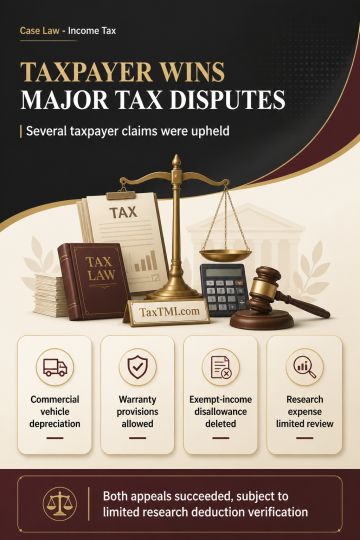
Commercial vehicle depreciation, scientifically determined warranty provisions and exempt-income disallowances were resolved in favour of the taxpayer...
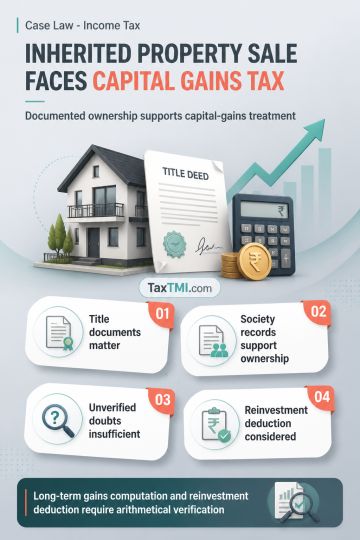
Inherited property sale proceeds require capital-gains treatment where ownership is supported by evidence, not suspicion or unverified signature doubt...
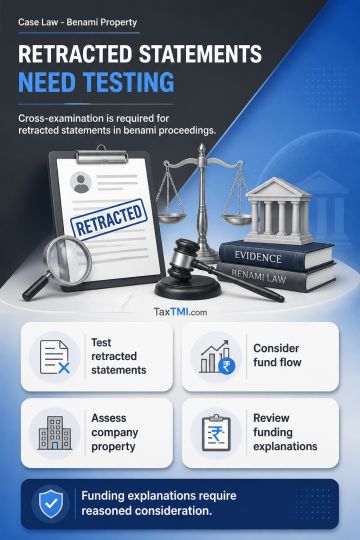
Cross-examination of retracted statements is essential where foundational evidence supports a benami allegation and documented funding explanations re...
Capital-goods exemption covers plant-modernisation accessories, while the import restriction applies only to earlier capital-goods components and spar...
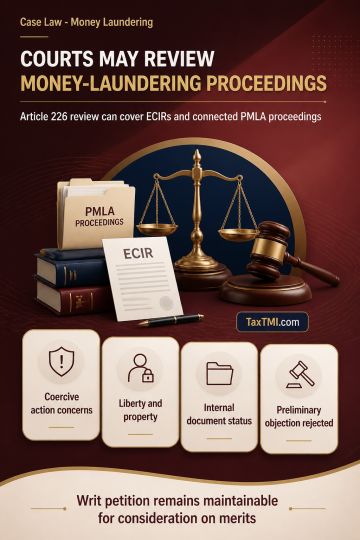
Constitutional judicial review permits challenges to ECIRs and connected money-laundering proceedings where coercive action affects fundamental intere...
The case involves the statutory interpretation of Entry 41 of Schedule II of the Act regarding the classification of a product as a medicated ointment. The court emphasized harmonizing inclusive and exclusive clauses in legislative provisions. Entry 41 aims to classify products based on medicinal properties, with medicated ointments receiving favorable tax treatment. The use of "but" in the entry indicates an exception for medicated ointments. The Revenue failed to disprove the product's classification, highlighting the importance of meeting the burden of proof. The court cited precedents emphasizing the Assessee's favorable interpretation in charging sections. The Tribunal's classification of the product as a medicated ointment was supported by robust evidence, leading to the dismissal of revision petitions. The High Court's revisional jurisdiction is limited to questions of law, jurisdictional errors, or procedural irregularities, not factual re-inquiry. Perversity in decisions requires meeting legal thresholds with concrete evidence. The Tribunal's decision was supported by substantial evidence, justifying the dismissal of revision petitions.
The case involves the statutory interpretation of Entry 41 of Schedule II of the Act regarding the classification of a product as a medicated ointment. The court emphasized harmonizing inclusive and exclusive clauses in legislative provisions. Entry 41 aims to classify products based on medicinal properties, with medicated ointments receiving favorable tax treatment. The use of "but" in the entry indicates an exception for medicated ointments. The Revenue failed to disprove the product's classification, highlighting the importance of meeting the burden of proof. The court cited precedents emphasizing the Assessee's favorable interpretation in charging sections. The Tribunal's classification of the product as a medicated ointment was supported by robust evidence, leading to the dismissal of revision petitions. The High Court's revisional jurisdiction is limited to questions of law, jurisdictional errors, or procedural irregularities, not factual re-inquiry. Perversity in decisions requires meeting legal thresholds with concrete evidence. The Tribunal's decision was supported by substantial evidence, justifying the dismissal of revision petitions.
Note: It is a system-generated summary and is for quick reference only.
 TaxTMI
 of 4782










 Join Channel


 TaxTMI
