Tax exemption for regulatory authority income applies retrospectively, subject to non-commercial activity, unchanged income sources, and return filing...
Dispute Resolution Panel objections must reach both prescribed forums; otherwise assessment may proceed and statutory appeal remains the proper remedy...
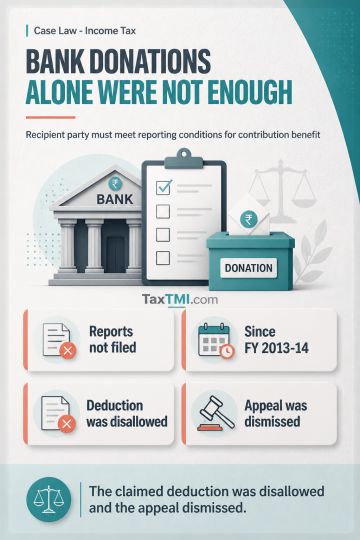
Political contribution deductions require recipient party compliance with contribution-reporting conditions; banking-channel donations alone do not qu...
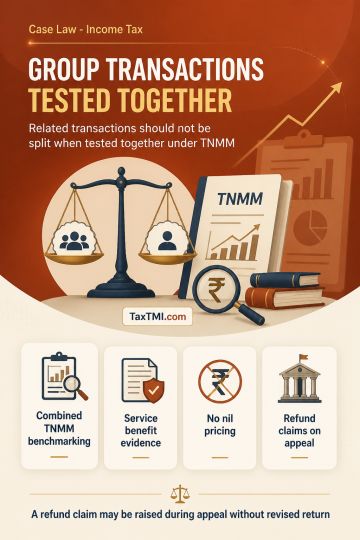
Aggregation under TNMM prevents selective testing of intra-group services without comparable uncontrolled transactions, while appellate additional cla...
Protective assessment cannot duplicate identical receipts under competing characterisations; remote services did not establish a taxable permanent est...
Page of 4784
Press 'Enter' after typing page number.
301 to 320 of 95673 Results
❮
❯
❯❯
0 / 200
Expand Note
Add to Folder
No Folders have been created
+
Are you sure you want to delete "My most important" ?
The case involves the statutory interpretation of Entry 41 of Schedule II of the Act regarding the classification of a product as a medicated ointment. The court emphasized harmonizing inclusive and exclusive clauses in legislative provisions. Entry 41 aims to classify products based on medicinal properties, with medicated ointments receiving favorable tax treatment. The use of "but" in the entry indicates an exception for medicated ointments. The Revenue failed to disprove the product's classification, highlighting the importance of meeting the burden of proof. The court cited precedents emphasizing the Assessee's favorable interpretation in charging sections. The Tribunal's classification of the product as a medicated ointment was supported by robust evidence, leading to the dismissal of revision petitions. The High Court's revisional jurisdiction is limited to questions of law, jurisdictional errors, or procedural irregularities, not factual re-inquiry. Perversity in decisions requires meeting legal thresholds with concrete evidence. The Tribunal's decision was supported by substantial evidence, justifying the dismissal of revision petitions.
The case involves the statutory interpretation of Entry 41 of Schedule II of the Act regarding the classification of a product as a medicated ointment. The court emphasized harmonizing inclusive and exclusive clauses in legislative provisions. Entry 41 aims to classify products based on medicinal properties, with medicated ointments receiving favorable tax treatment. The use of "but" in the entry indicates an exception for medicated ointments. The Revenue failed to disprove the product's classification, highlighting the importance of meeting the burden of proof. The court cited precedents emphasizing the Assessee's favorable interpretation in charging sections. The Tribunal's classification of the product as a medicated ointment was supported by robust evidence, leading to the dismissal of revision petitions. The High Court's revisional jurisdiction is limited to questions of law, jurisdictional errors, or procedural irregularities, not factual re-inquiry. Perversity in decisions requires meeting legal thresholds with concrete evidence. The Tribunal's decision was supported by substantial evidence, justifying the dismissal of revision petitions.
Note: It is a system-generated summary and is for quick reference only.
 TaxTMI
 of 4784












 Join Channel


 TaxTMI