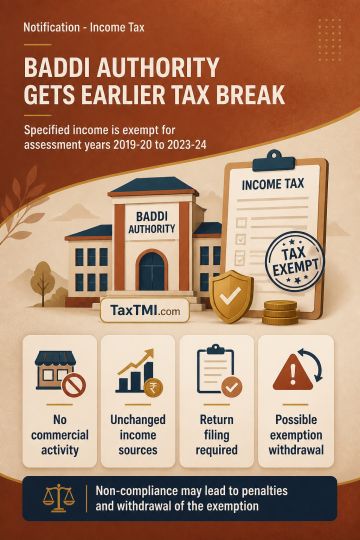
Specified income of Baddi Barotiwala Nalagarh Development Authority receives conditional tax exemption, retrospectively covering its designated assess...
Specified development authority income receives retrospective tax exemption, subject to non-commercial activity, unchanged income sources, and return-...
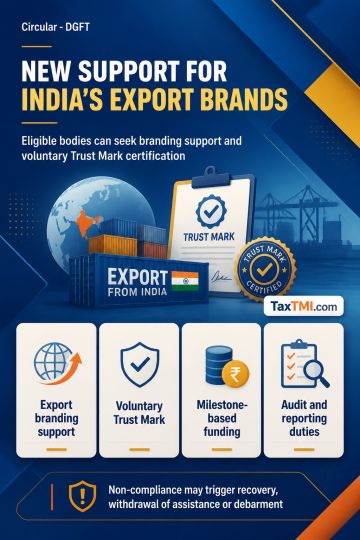
Unified Brand India framework introduces voluntary Trust Mark certification and funding support for export branding, packaging and global promotional ...
Origin Declaration authentication governs preferential tariff claims under India-UK CETA, requiring a validated reference number before import clearan...
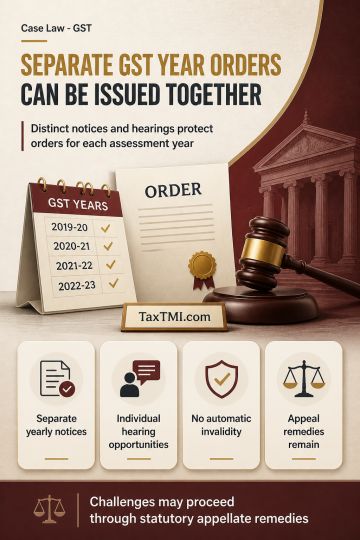
Separate assessment orders for different years remain valid when distinct notices and hearing opportunities prevent prejudice from combined proceeding...
The case involved a challenge to assessment orders regarding whether sponsorship receipts constitute "payment for admission to entertainment." The court examined if the pre-amended Section 2(m) of the Delhi Entertainment and Betting Tax Act covered sponsorship of fashion shows and sporting events for extending tax u/s 6. The court held that sponsorship receipts did not fall under the taxable event for entertainment tax as defined in Section 6. The retrospective introduction of Explanation 2 was deemed burdensome and onerous, not clarificatory. The court concluded that the Act lacked a specific charging provision for taxing sponsorships and did not provide a mechanism for assessing and collecting tax on sponsorships. Therefore, the petition was allowed by the High Court.
The case involved a challenge to assessment orders regarding whether sponsorship receipts constitute "payment for admission to entertainment." The court examined if the pre-amended Section 2(m) of the Delhi Entertainment and Betting Tax Act covered sponsorship of fashion shows and sporting events for extending tax u/s 6. The court held that sponsorship receipts did not fall under the taxable event for entertainment tax as defined in Section 6. The retrospective introduction of Explanation 2 was deemed burdensome and onerous, not clarificatory. The court concluded that the Act lacked a specific charging provision for taxing sponsorships and did not provide a mechanism for assessing and collecting tax on sponsorships. Therefore, the petition was allowed by the High Court.
Note: It is a system-generated summary and is for quick reference only.
 TaxTMI
 of 4796













 Join Channel


 TaxTMI

