Authentication of paper assessment orders upheld, while qualifying repairs, consumables and vendor advance write-offs remain deductible business claim...
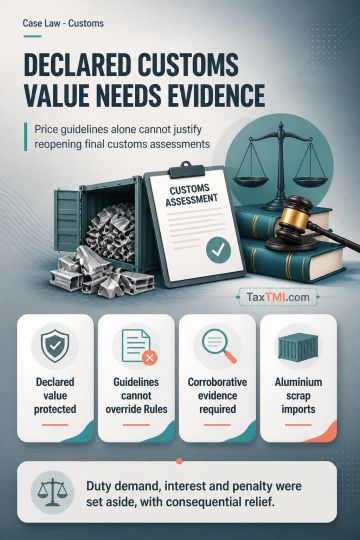
Transaction value cannot be rejected solely on non-statutory valuation guidelines without corroborative evidence supporting reassessment of final cust...
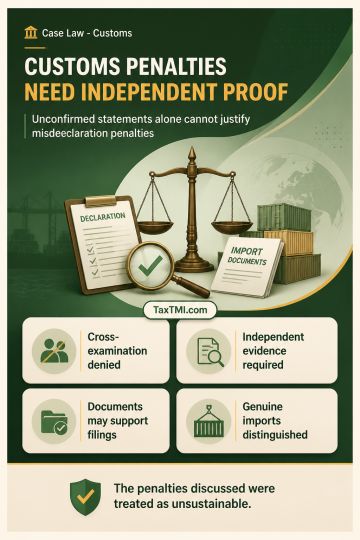
Cross-examination rights and corroborated evidence limit customs penalties for misdeclaration in genuine import transactions involving documented clea...
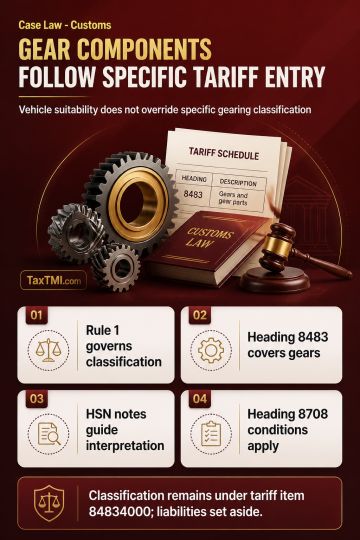
Tariff classification of vehicle gear components follows the specific gearing entry, displacing motor-vehicle parts classification and related liabili...
Page of 4786
Press 'Enter' after typing page number.
381 to 400 of 95715 Results
❮
❯
❯❯
0 / 200
Expand Note
Add to Folder
No Folders have been created
+
Are you sure you want to delete "My most important" ?
The case involved a challenge to assessment orders regarding whether sponsorship receipts constitute "payment for admission to entertainment." The court examined if the pre-amended Section 2(m) of the Delhi Entertainment and Betting Tax Act covered sponsorship of fashion shows and sporting events for extending tax u/s 6. The court held that sponsorship receipts did not fall under the taxable event for entertainment tax as defined in Section 6. The retrospective introduction of Explanation 2 was deemed burdensome and onerous, not clarificatory. The court concluded that the Act lacked a specific charging provision for taxing sponsorships and did not provide a mechanism for assessing and collecting tax on sponsorships. Therefore, the petition was allowed by the High Court.
The case involved a challenge to assessment orders regarding whether sponsorship receipts constitute "payment for admission to entertainment." The court examined if the pre-amended Section 2(m) of the Delhi Entertainment and Betting Tax Act covered sponsorship of fashion shows and sporting events for extending tax u/s 6. The court held that sponsorship receipts did not fall under the taxable event for entertainment tax as defined in Section 6. The retrospective introduction of Explanation 2 was deemed burdensome and onerous, not clarificatory. The court concluded that the Act lacked a specific charging provision for taxing sponsorships and did not provide a mechanism for assessing and collecting tax on sponsorships. Therefore, the petition was allowed by the High Court.
Note: It is a system-generated summary and is for quick reference only.
 TaxTMI
 of 4786













 Join Channel


 TaxTMI