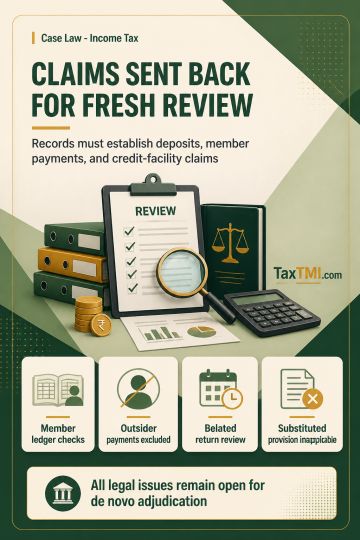
Cooperative society deposits, member-interest TDS exemption and credit-facility deduction claims require verification through records and supporting e...
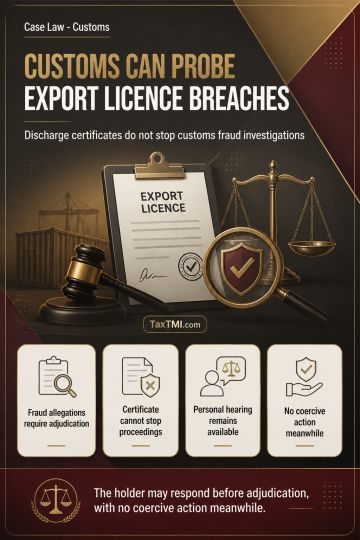
Customs jurisdiction over EPCG condition breaches survives export-obligation discharge certificates, requiring alleged fraud and misdeclaration to be ...
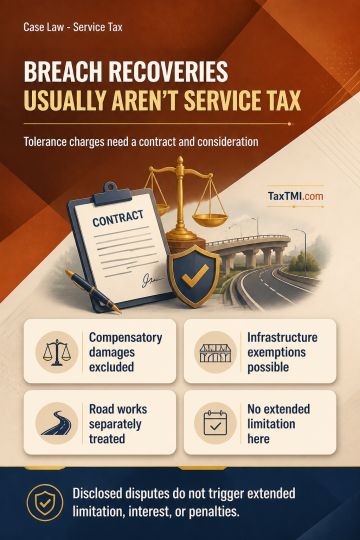
Contractual tolerance requires consideration; breach recoveries, qualifying public infrastructure services and road works escape service tax liability...
The case involves determining whether income from a property owned by the assessee should be classified as "income from house property" or "business income." The Revenue's interpretation of Section 22, suggesting a different treatment for those in the business of letting out properties, was rejected. The Tribunal allowed the appeals based on the principle of consistency, noting the AO's prior acceptance of the income as house property. The Tribunal's decision was supported by the principle that a position maintained over different assessment years should not be altered without new facts. The Supreme Court's ruling in M/s. Radhasoami Satsang emphasizes this principle. The High Court found no substantial question of law in the matter.
The case involves determining whether income from a property owned by the assessee should be classified as "income from house property" or "business income." The Revenue's interpretation of Section 22, suggesting a different treatment for those in the business of letting out properties, was rejected. The Tribunal allowed the appeals based on the principle of consistency, noting the AO's prior acceptance of the income as house property. The Tribunal's decision was supported by the principle that a position maintained over different assessment years should not be altered without new facts. The Supreme Court's ruling in M/s. Radhasoami Satsang emphasizes this principle. The High Court found no substantial question of law in the matter.
Note: It is a system-generated summary and is for quick reference only.
 TaxTMI
 of 4786



 Join Channel


 TaxTMI