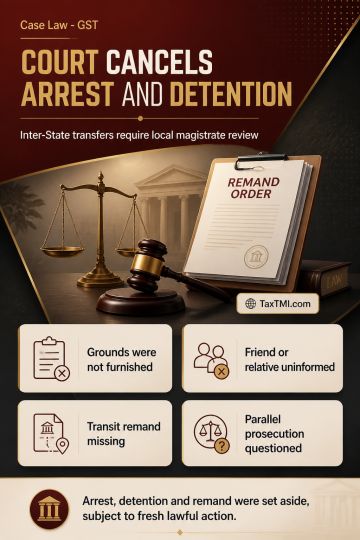
Arrest safeguards and transit remand requirements invalidated detention following inter-State transfer without communicated grounds or magistrate auth...
Arrest safeguards require disclosed grounds, relative intimation and transit remand, while duplicate prosecution under the CGST framework is unsustain...
Document Identification Number defects can invalidate GST assessments, with delayed challenges entertained conditionally where patent irregularities e...
Windmill commissioning evidence supported higher depreciation where grid connection and electricity generation proved operational use before the relev...
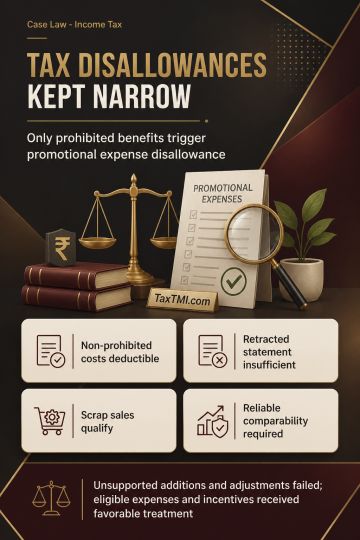
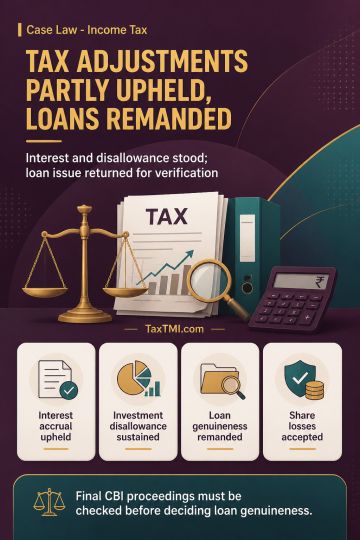
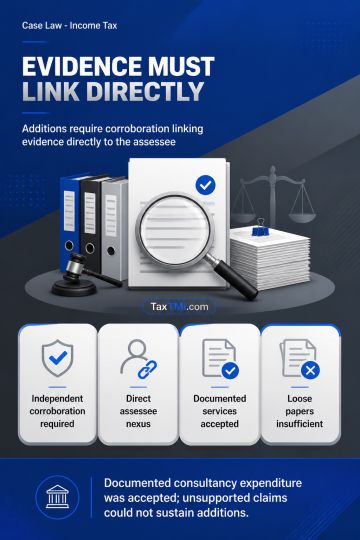
Pharmaceutical promotion and transfer-pricing comparability principles limited disallowances, while uncorroborated search allegations and unsupported ...
Business expenditure substantiation supports scrap credits, statutory payments and expense claims, while depreciation requires proof of actual busines...
Page of 4794
Press 'Enter' after typing page number.
621 to 640 of 95875 Results
❮
❯
❯❯
0 / 200
Expand Note
Add to Folder
No Folders have been created
+
Are you sure you want to delete "My most important" ?
Insolvency and BankruptcyAugust 7, 2024Case LawsHC
Seeking to quash the demand notice for arrears of unpaid electricity charges, the court examined the scope of the Insolvency and Bankruptcy Code (IBC) and the potential for misuse. It held that operational creditors have a right to property under Article 300A of the Constitution, which is a facet of the right to life under Article 21. The Adjudicating Authority is a neutral tribunal to secure the rights of operational creditors against unfair treatment by the Committee of Creditors (CoC). While the Adjudicating Authority cannot substitute its sense of fairness for the CoC's commercial wisdom, it has a revisional jurisdiction to ascertain the correctness of the CoC's actions. The court discussed the finality of the resolution plan, the applicability of the doctrine of Constructive Res Judicata (CST), and the potential for fraud and manipulation in the IBC process. It emphasized the need to protect the interests of operational creditors and questioned the intent of bending backwards to protect one corporate debtor at the risk of exposing public interest to peril.
Seeking to quash the demand notice for arrears of unpaid electricity charges, the court examined the scope of the Insolvency and Bankruptcy Code (IBC) and the potential for misuse. It held that operational creditors have a right to property under Article 300A of the Constitution, which is a facet of the right to life under Article 21. The Adjudicating Authority is a neutral tribunal to secure the rights of operational creditors against unfair treatment by the Committee of Creditors (CoC). While the Adjudicating Authority cannot substitute its sense of fairness for the CoC's commercial wisdom, it has a revisional jurisdiction to ascertain the correctness of the CoC's actions. The court discussed the finality of the resolution plan, the applicability of the doctrine of Constructive Res Judicata (CST), and the potential for fraud and manipulation in the IBC process. It emphasized the need to protect the interests of operational creditors and questioned the intent of bending backwards to protect one corporate debtor at the risk of exposing public interest to peril.
Note: It is a system-generated summary and is for quick reference only.
 TaxTMI
 of 4794















 Join Channel


 TaxTMI