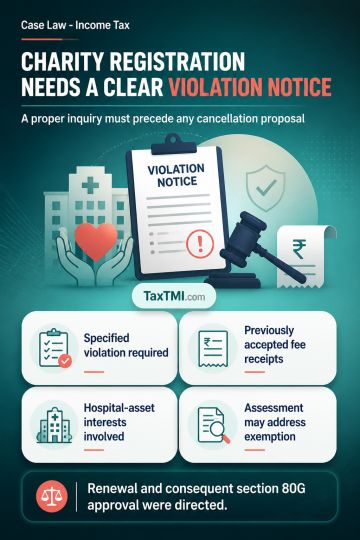
Charitable trust registration requires a specified-violation notice; settled cash deposits and related-party payments did not justify cancellation or ...
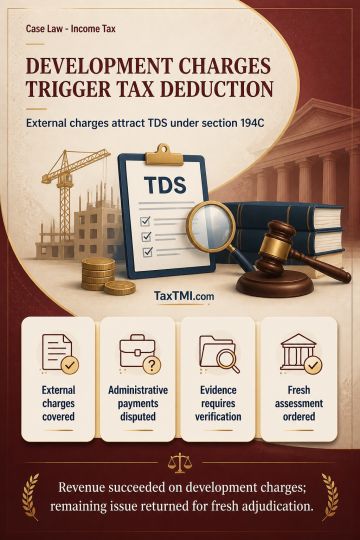
External development charges trigger TDS under section 194C, while disputed administrative payments require factual verification and fresh adjudicatio...
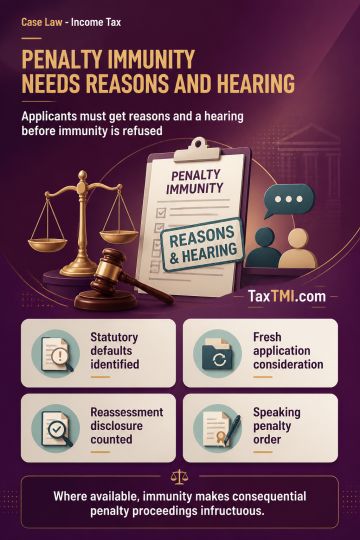
Section 270AA penalty immunity requires identified statutory defaults and a hearing before rejection; reassessment disclosure may constitute under-rep...
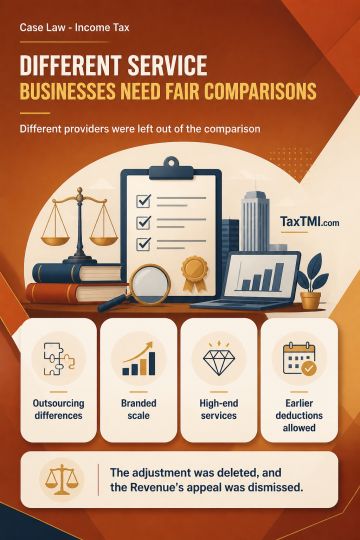
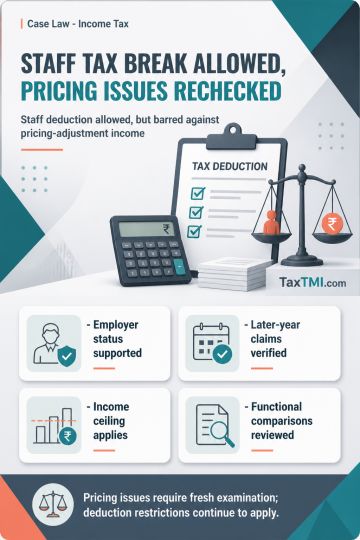
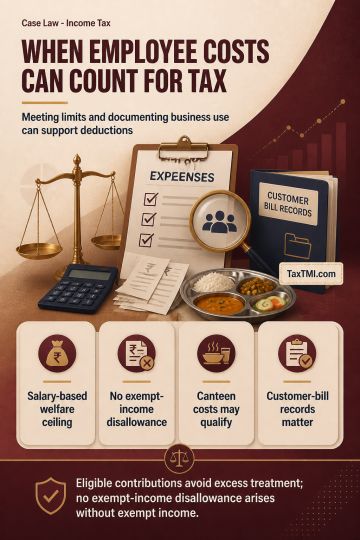
Section 80JJAA employee-cost deduction allowed for deployed staff but barred against transfer-pricing income enhancement, with pricing issues remanded...
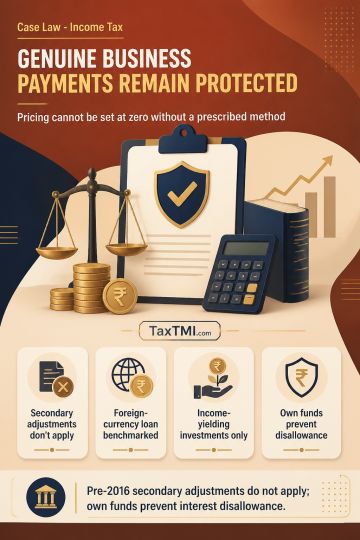
Transfer-pricing methodology protects commercially genuine associated-enterprise payments, while pre-2016 secondary adjustments and related notional i...
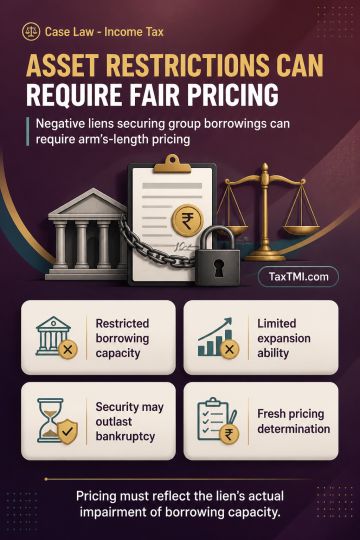
Negative liens over operating assets can constitute international transactions requiring arm's-length pricing reflecting restricted borrowing and expa...
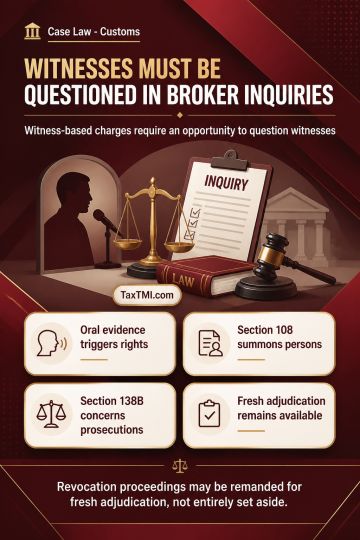
Cross-examination rights in Customs Broker revocation inquiries require witness examination; procedural denial may be cured through fresh adjudication...
The statute outlines that appeals can be filed to the High Court within sixty days from the date the decision or order is communicated to the aggrieved party, addressing any question of law or fact arising out of such order. 'High Court' has been defined to be the High Court within the jurisdiction of which the aggrieved party ordinarily resides or carries on business or personally works for gain. The Petitioner is based in Mumbai, conducting business and presumably working for gain there. Consequently, based on the explicit language of Section 42, the High Court of Bombay would ordinarily have jurisdiction to hear appeal against decision passed by the Appellate Tribunal. The Petitioner cannot override the statutory mechanism by relying on the geographical location of the Appellate Authority within this Court's jurisdiction. There is no basis for the Court to conclude that the alternate remedy is not equally efficient and adequate. The Court finds that the said remedy is both appropriate and sufficient for addressing the grievances presented by the Petitioner. There is no evidence to suggest that the remedy would be ineffective or lead to an injustice that justifies bypassing them. The Petitioner is free to pursue the available statutory remedies, which are deemed adequate for resolving the legal challenges at hand. Petition dismissed.
The statute outlines that appeals can be filed to the High Court within sixty days from the date the decision or order is communicated to the aggrieved party, addressing any question of law or fact arising out of such order. 'High Court' has been defined to be the High Court within the jurisdiction of which the aggrieved party ordinarily resides or carries on business or personally works for gain. The Petitioner is based in Mumbai, conducting business and presumably working for gain there. Consequently, based on the explicit language of Section 42, the High Court of Bombay would ordinarily have jurisdiction to hear appeal against decision passed by the Appellate Tribunal. The Petitioner cannot override the statutory mechanism by relying on the geographical location of the Appellate Authority within this Court's jurisdiction. There is no basis for the Court to conclude that the alternate remedy is not equally efficient and adequate. The Court finds that the said remedy is both appropriate and sufficient for addressing the grievances presented by the Petitioner. There is no evidence to suggest that the remedy would be ineffective or lead to an injustice that justifies bypassing them. The Petitioner is free to pursue the available statutory remedies, which are deemed adequate for resolving the legal challenges at hand. Petition dismissed.
Note: It is a system-generated summary and is for quick reference only.
 TaxTMI
  TaxTMI
 of 4828




 Join Channel


