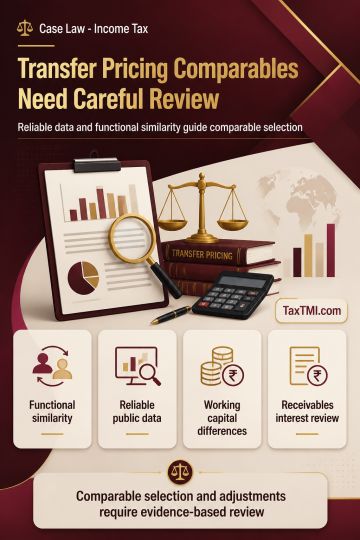
Transfer pricing comparability requires functional alignment, reliable financial data, and careful review of working capital and receivables adjustmen...
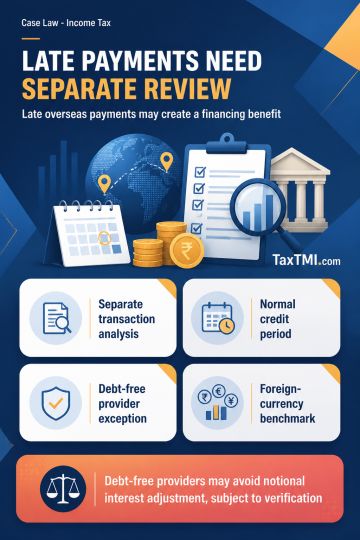
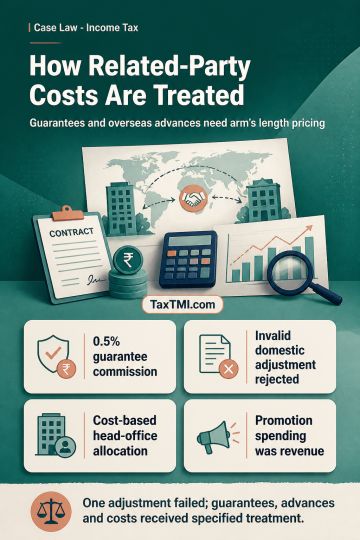
Transfer pricing rules require benchmarking corporate guarantees and associated-enterprise advances, while invalid domestic-transaction adjustments ca...
The petitioner filed a refund application within the two-year limitation period for the year 2017-2018 on 17.09.2018, and subsequently filed a fresh refund application on 2.01.2020 after receiving a deficiency memo. The High Court held that the original refund application filed on 17.09.2018 would be considered a proper refund application within the limitation period, and the fresh refund application filed pursuant to the deficiency memo would be considered a continuation of the first refund application. The impugned order dated 20.02.2020 rejecting the refund application on the ground of limitation was quashed and set aside, and the refund application filed on 17.09.2018 was restored for consideration on merits by the proper officer in accordance with the law.
The petitioner filed a refund application within the two-year limitation period for the year 2017-2018 on 17.09.2018, and subsequently filed a fresh refund application on 2.01.2020 after receiving a deficiency memo. The High Court held that the original refund application filed on 17.09.2018 would be considered a proper refund application within the limitation period, and the fresh refund application filed pursuant to the deficiency memo would be considered a continuation of the first refund application. The impugned order dated 20.02.2020 rejecting the refund application on the ground of limitation was quashed and set aside, and the refund application filed on 17.09.2018 was restored for consideration on merits by the proper officer in accordance with the law.
Note: It is a system-generated summary and is for quick reference only.
 TaxTMI
 of 4803







 Join Channel


 TaxTMI
