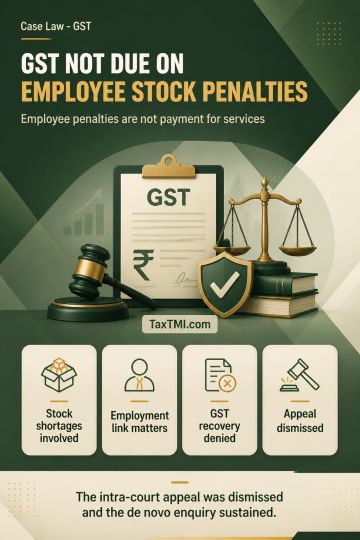
Employee stock-shortage penalties do not constitute consideration for services, preventing GST collection under Schedule II in employment relationship...
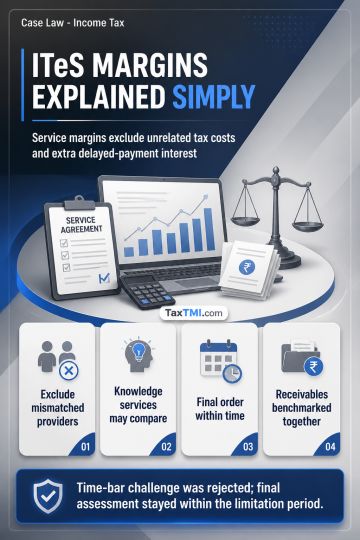
Transfer-pricing treatment of ITeS margins excludes pass-through tax recoveries and separate delayed-receivables interest after working-capital adjust...
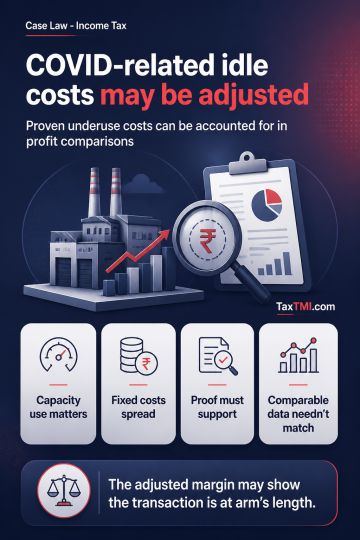
Capacity-utilisation adjustments under TNMM can neutralise substantiated COVID-related idle costs where underutilisation materially affects profitabil...
Page of 4830
Press 'Enter' after typing page number.
181 to 200 of 96587 Results
❮
❯
❯❯
0 / 200
Expand Note
Add to Folder
No Folders have been created
+
Are you sure you want to delete "My most important" ?
The court interpreted Section 141 of the Negotiable Instruments Act, holding that managing directors and joint managing directors are responsible for the company's conduct by virtue of their position. Signatories of dishonored checks are also covered u/s 141(2). In the absence of averments u/s 50(1) of the 1984 Act in the complaint, the trial court could not take cognizance against the directors. However, the managing director would be responsible for the company's business. The complaint was quashed against the directors but allowed against the managing director and the company. The Supreme Court's order was modified accordingly.
The court interpreted Section 141 of the Negotiable Instruments Act, holding that managing directors and joint managing directors are responsible for the company's conduct by virtue of their position. Signatories of dishonored checks are also covered u/s 141(2). In the absence of averments u/s 50(1) of the 1984 Act in the complaint, the trial court could not take cognizance against the directors. However, the managing director would be responsible for the company's business. The complaint was quashed against the directors but allowed against the managing director and the company. The Supreme Court's order was modified accordingly.
Note: It is a system-generated summary and is for quick reference only.
 TaxTMI
  TaxTMI
 of 4830



 Join Channel


