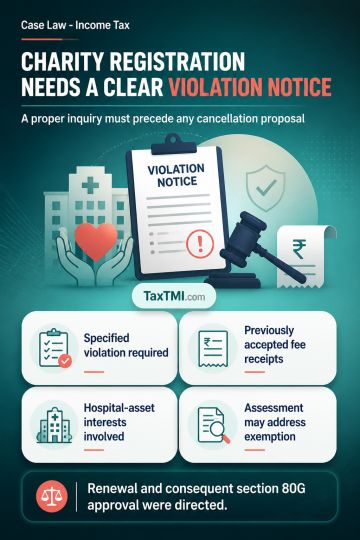
Charitable trust registration requires a specified-violation notice; settled cash deposits and related-party payments did not justify cancellation or ...
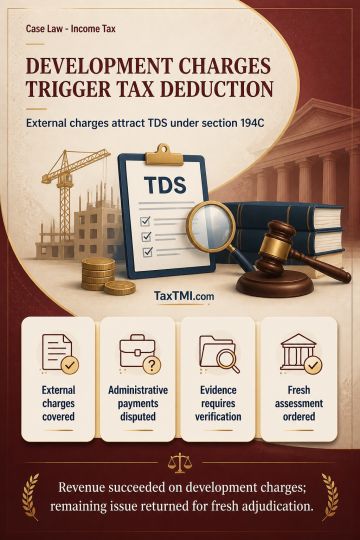
External development charges trigger TDS under section 194C, while disputed administrative payments require factual verification and fresh adjudicatio...
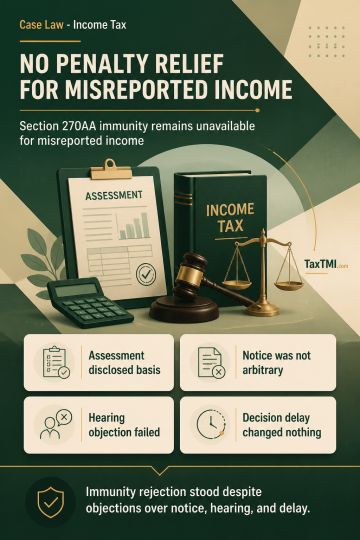
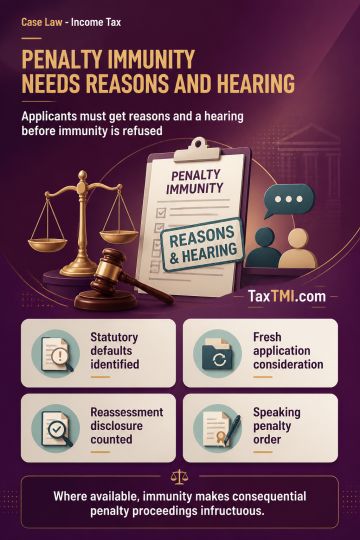
Section 270AA penalty immunity requires identified statutory defaults and a hearing before rejection; reassessment disclosure may constitute under-rep...
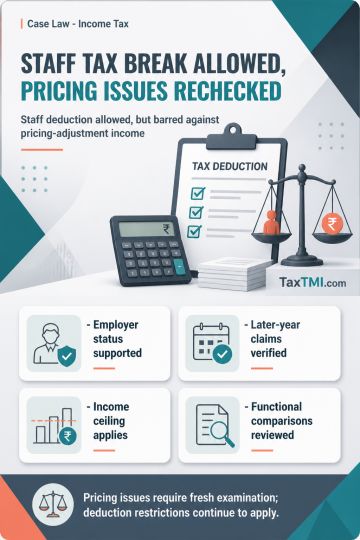
Section 80JJAA employee-cost deduction allowed for deployed staff but barred against transfer-pricing income enhancement, with pricing issues remanded...
Page of 4830
Press 'Enter' after typing page number.
141 to 160 of 96587 Results
❮
❯
❯❯
0 / 200
Expand Note
Add to Folder
No Folders have been created
+
Are you sure you want to delete "My most important" ?
The Commercial Tax Tribunal cannot proceed to consider and decide an appeal ex parte in the absence of the revisionist/appellant, as it would violate principles of natural justice. Where the appellant does not appear, the appeal should be dismissed for want of prosecution rather than deciding it on merits. The proviso to Rule 63(4) of the U.P. Value Added Tax Rules, 2008, allowing ex parte hearing in absence of either party, should be interpreted as permitting ex parte proceedings against the respondent/State in case of their non-appearance, but not against the appellant/plaintiff. In case of appellant's absence, the only consequence should be dismissal of appeal for non-prosecution, not deciding it on merits. Adequate provision for rectification u/s 31 exists if an ex parte order is passed against the appellant. The impugned order deciding the appeal ex parte in appellant's absence is illegal, arbitrary, and set aside, with the matter remitted to the Tribunal for fresh consideration after hearing the parties.
The Commercial Tax Tribunal cannot proceed to consider and decide an appeal ex parte in the absence of the revisionist/appellant, as it would violate principles of natural justice. Where the appellant does not appear, the appeal should be dismissed for want of prosecution rather than deciding it on merits. The proviso to Rule 63(4) of the U.P. Value Added Tax Rules, 2008, allowing ex parte hearing in absence of either party, should be interpreted as permitting ex parte proceedings against the respondent/State in case of their non-appearance, but not against the appellant/plaintiff. In case of appellant's absence, the only consequence should be dismissal of appeal for non-prosecution, not deciding it on merits. Adequate provision for rectification u/s 31 exists if an ex parte order is passed against the appellant. The impugned order deciding the appeal ex parte in appellant's absence is illegal, arbitrary, and set aside, with the matter remitted to the Tribunal for fresh consideration after hearing the parties.
Note: It is a system-generated summary and is for quick reference only.
 TaxTMI
  TaxTMI
 of 4830









 Join Channel


