Patent-settlement expenditure treated as commercially expedient revenue outlay, with foreign-law restrictions inapplicable before the prospective amen...
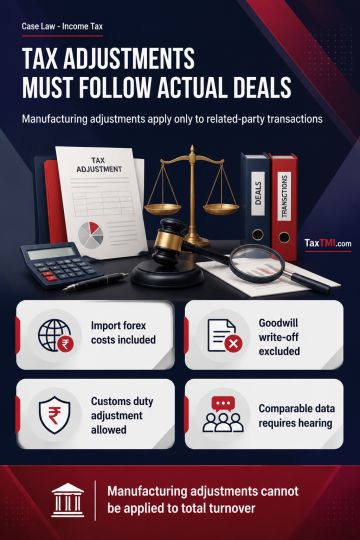
International transaction benchmarking restricts transfer pricing adjustments to associated-enterprise dealings, while functional comparability govern...
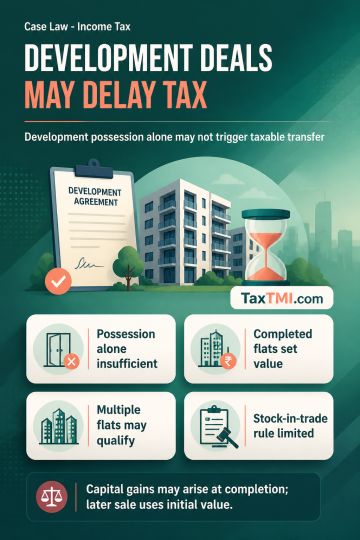
Joint development agreements defer taxable transfer where possession lacks part performance, while completed flats determine consideration and exempti...
Passenger baggage re-export requires true declaration and cannot be granted indirectly through discretionary redemption of undeclared prohibited goods...
Page of 4803
Press 'Enter' after typing page number.
501 to 520 of 96046 Results
❮
❯
❯❯
0 / 200
Expand Note
Add to Folder
No Folders have been created
+
Are you sure you want to delete "My most important" ?
The respondent authority failed to provide reasons for levying...
Transfer of goods between own units without sale shouldn't attract interest/penalty. Authorities must give reasons as per CBIC circular & court precedents.
Contents
Summary
Note
Bookmark
Share
✓ Copied successfully !
Print
Print Options
For full text, please login
Login to TaxTMI
Verification Pending
The Email Id has not been verified. Click on the link we have sent on
The respondent authority failed to provide reasons for levying interest and penalty, despite the goods being transferred between the petitioner's establishments, not sold. The court relied on CBIC's circular and previous judgments in Dhabriya Polywood Ltd. and Orson Holdings Company Ltd., which granted benefit of doubt and considered lack of ill-intent, respectively. The impugned orders were quashed and set aside, and the matter was remanded for a fresh de novo order, assigning detailed reasons after hearing the petitioner, considering the cited decisions.
The respondent authority failed to provide reasons for levying interest and penalty, despite the goods being transferred between the petitioner's establishments, not sold. The court relied on CBIC's circular and previous judgments in Dhabriya Polywood Ltd. and Orson Holdings Company Ltd., which granted benefit of doubt and considered lack of ill-intent, respectively. The impugned orders were quashed and set aside, and the matter was remanded for a fresh de novo order, assigning detailed reasons after hearing the petitioner, considering the cited decisions.
Note: It is a system-generated summary and is for quick reference only.
 TaxTMI
 of 4803










 Join Channel


 TaxTMI