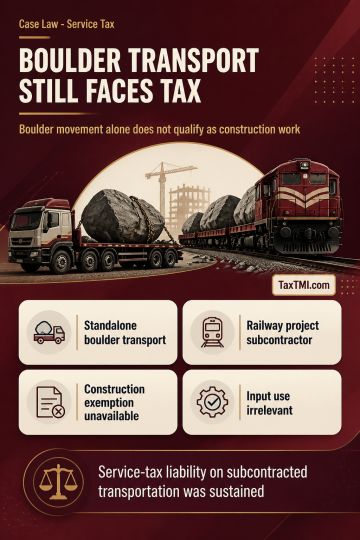
Original works exemption excludes standalone boulder transportation, leaving subcontracted railway-project transport services subject to service tax l...
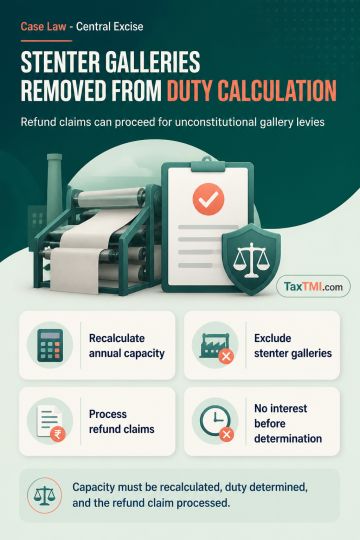
Annual production capacity determinations excluding stenter galleries support refunds for unconstitutional excise levies without an unjust-enrichment ...
Vicarious liability for cheque dishonour requires specific allegations of responsibility and cheque signatory; generic director allegations cannot sus...
IT Resilience Index requires market infrastructure institutions to automate resilience scoring, early warnings, and continuous service-delivery monito...
The key aspects of the case relate to the maintainability of an application before the Advance Ruling Authority, classification of imported goods, and the applicability of Rule 2(a) for determining the classification. The court held that the expression "business" in Section 28E(a) of the Customs Act must be given a wide meaning, encompassing business models/modus operandi, not just products. The change in the applicant's business model constituted an "activity" for the purpose of Section 28E, rendering the application maintainable. Regarding classification, the court reiterated that until all components of a complete article are presented together for assessment, Rule 2(a) cannot be invoked to classify the parts as a complete article. As six essential components were procured from Indian vendors, the imports could not be classified as motor vehicles u/r 2(a). Consequently, the court dismissed the writ petition, upholding the impugned order.
The key aspects of the case relate to the maintainability of an application before the Advance Ruling Authority, classification of imported goods, and the applicability of Rule 2(a) for determining the classification. The court held that the expression "business" in Section 28E(a) of the Customs Act must be given a wide meaning, encompassing business models/modus operandi, not just products. The change in the applicant's business model constituted an "activity" for the purpose of Section 28E, rendering the application maintainable. Regarding classification, the court reiterated that until all components of a complete article are presented together for assessment, Rule 2(a) cannot be invoked to classify the parts as a complete article. As six essential components were procured from Indian vendors, the imports could not be classified as motor vehicles u/r 2(a). Consequently, the court dismissed the writ petition, upholding the impugned order.
Note: It is a system-generated summary and is for quick reference only.
 TaxTMI
  TaxTMI
 of 4821







 Join Channel