Online bond platforms may offer overseas-regulated products and tax-specific bonds subject to disclosures, compliance safeguards and revised complianc...
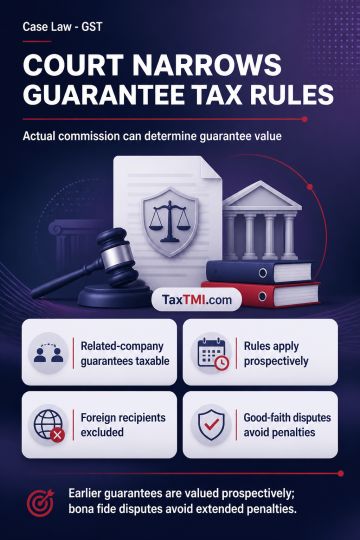
Corporate guarantee valuation permits actual ascertainable commission while barring retroactive application and extended-period penalties for bona fid...
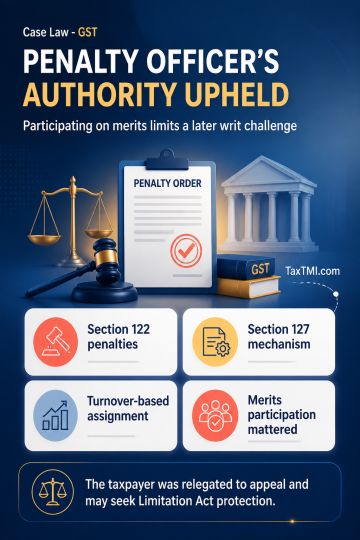
Proper-officer jurisdiction under UPGST penalty provisions upheld; participation on merits prevents bypassing the statutory appellate remedy through w...
Transitioned CENVAT credit may validly satisfy mandatory pre-deposit requirements for legacy service tax appeals through Electronic Credit Ledger debi...
Building-plan sanction charges require statutory authority; unauthorised fees and GST were quashed, while labour cess must follow prescribed collectio...
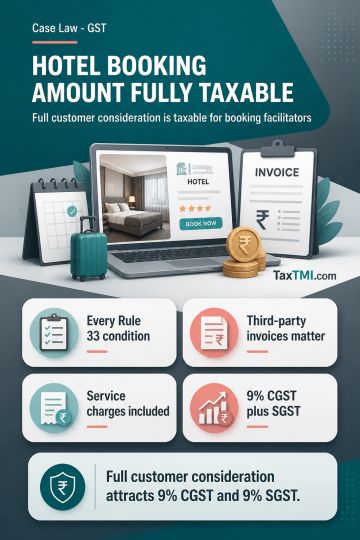
Pure-agent exclusion fails where hotel booking facilitators receive third-party services themselves, making entire customer consideration taxable as r...
The key aspects of the case relate to the maintainability of an application before the Advance Ruling Authority, classification of imported goods, and the applicability of Rule 2(a) for determining the classification. The court held that the expression "business" in Section 28E(a) of the Customs Act must be given a wide meaning, encompassing business models/modus operandi, not just products. The change in the applicant's business model constituted an "activity" for the purpose of Section 28E, rendering the application maintainable. Regarding classification, the court reiterated that until all components of a complete article are presented together for assessment, Rule 2(a) cannot be invoked to classify the parts as a complete article. As six essential components were procured from Indian vendors, the imports could not be classified as motor vehicles u/r 2(a). Consequently, the court dismissed the writ petition, upholding the impugned order.
The key aspects of the case relate to the maintainability of an application before the Advance Ruling Authority, classification of imported goods, and the applicability of Rule 2(a) for determining the classification. The court held that the expression "business" in Section 28E(a) of the Customs Act must be given a wide meaning, encompassing business models/modus operandi, not just products. The change in the applicant's business model constituted an "activity" for the purpose of Section 28E, rendering the application maintainable. Regarding classification, the court reiterated that until all components of a complete article are presented together for assessment, Rule 2(a) cannot be invoked to classify the parts as a complete article. As six essential components were procured from Indian vendors, the imports could not be classified as motor vehicles u/r 2(a). Consequently, the court dismissed the writ petition, upholding the impugned order.
Note: It is a system-generated summary and is for quick reference only.
 TaxTMI
  TaxTMI
 of 4828















 Join Channel


