Fraudulent import documents suspend limitation protection, while redemption of confiscated goods requires duty and interest despite bona fide purchase...
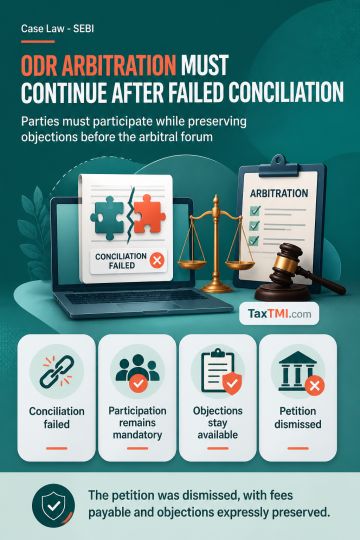
ODR arbitration participation remains mandatory after failed conciliation, while jurisdictional and maintainability objections stay available before t...
Transparency in technical bid evaluation requires disclosed standards and recorded reasons; opaque scoring invalidated tender awards and required fres...
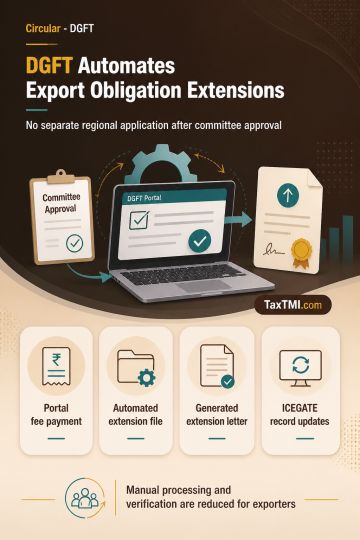
Automated export obligation extensions remove separate regional applications after committee approval for Advance Authorisation and EPCG authorisation...
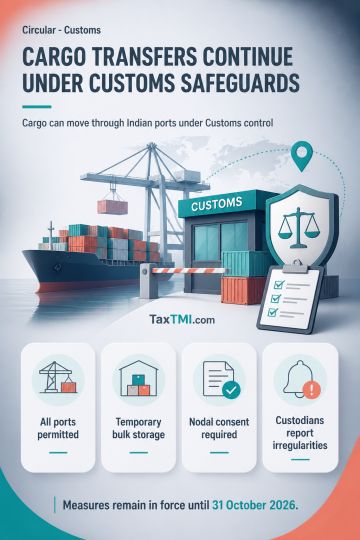
International cargo transhipment through Indian ports continues with Customs-controlled storage, re-export safeguards, and coordinated multi-station m...
The key aspects of the case relate to the maintainability of an application before the Advance Ruling Authority, classification of imported goods, and the applicability of Rule 2(a) for determining the classification. The court held that the expression "business" in Section 28E(a) of the Customs Act must be given a wide meaning, encompassing business models/modus operandi, not just products. The change in the applicant's business model constituted an "activity" for the purpose of Section 28E, rendering the application maintainable. Regarding classification, the court reiterated that until all components of a complete article are presented together for assessment, Rule 2(a) cannot be invoked to classify the parts as a complete article. As six essential components were procured from Indian vendors, the imports could not be classified as motor vehicles u/r 2(a). Consequently, the court dismissed the writ petition, upholding the impugned order.
The key aspects of the case relate to the maintainability of an application before the Advance Ruling Authority, classification of imported goods, and the applicability of Rule 2(a) for determining the classification. The court held that the expression "business" in Section 28E(a) of the Customs Act must be given a wide meaning, encompassing business models/modus operandi, not just products. The change in the applicant's business model constituted an "activity" for the purpose of Section 28E, rendering the application maintainable. Regarding classification, the court reiterated that until all components of a complete article are presented together for assessment, Rule 2(a) cannot be invoked to classify the parts as a complete article. As six essential components were procured from Indian vendors, the imports could not be classified as motor vehicles u/r 2(a). Consequently, the court dismissed the writ petition, upholding the impugned order.
Note: It is a system-generated summary and is for quick reference only.
 TaxTMI
  TaxTMI
 of 4821
















 Join Channel