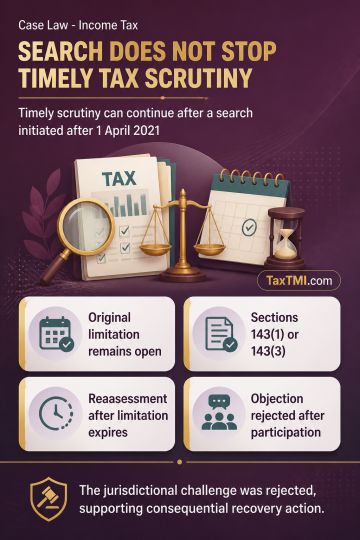
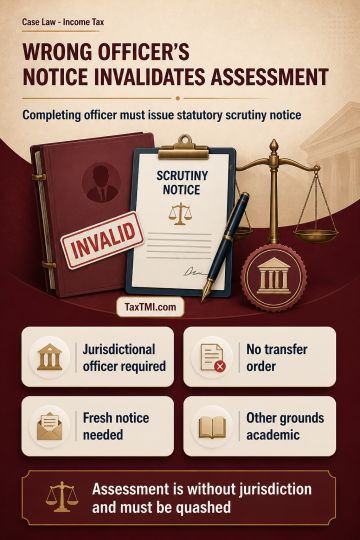
Post-search scrutiny assessment remains available where original assessment limitation is unexpired, permitting timely completion under regular assess...
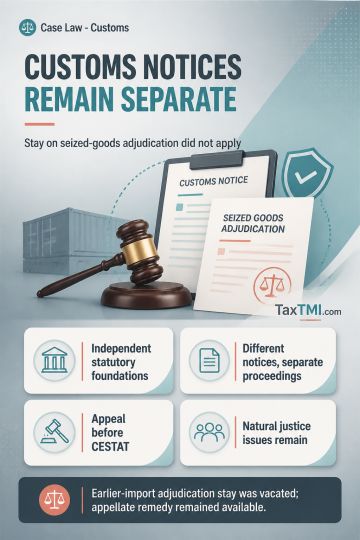
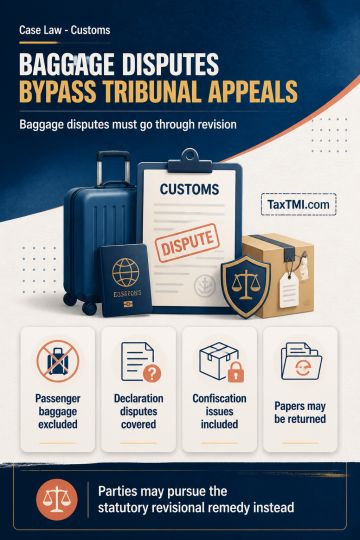
Independent show-cause notices remain separate proceedings, while customs adjudication challenges should ordinarily follow the statutory appellate rem...
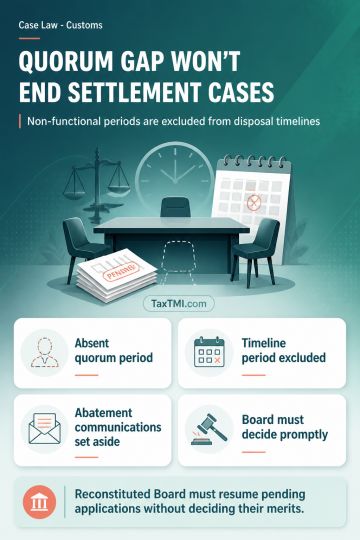
Institutional incapacity in customs settlement proceedings excludes non-functional quorum periods from statutory disposal timelines, preventing automa...
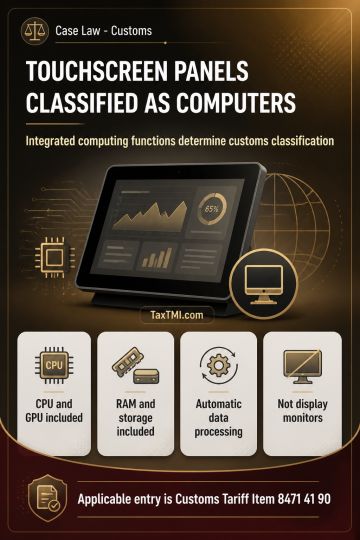
Interactive touchscreen panels with integrated computing functions fall under automatic data-processing machines rather than display monitors for cust...
Page of 4824
Press 'Enter' after typing page number.
841 to 860 of 96463 Results
❮
❯
❯❯
0 / 200
Expand Note
Add to Folder
No Folders have been created
+
Are you sure you want to delete "My most important" ?
Dishonour of cheque - vicarious liability in criminal law - The SC interpreted Section 7 of the NI Act to identify the "drawer" as the individual issuing the cheque, establishing the drawer's primary obligation u/s 138 to maintain sufficient funds. The argument that directors or authorized signatories should be liable u/s 143A misinterprets statutory language and intent. The general rule against vicarious criminal liability underscores that individuals are not typically liable for others' acts unless specific provisions extend such liability. Section 141 extends liability to company officers for cheque dishonour, but liability arises from individual conduct, not merely position. The SC upheld the strict interpretation of "drawer" as the cheque issuer, excluding authorized signatories, aligning with legislative intent, precedents, and interpretation principles. The primary liability lies with the company, while management is vicariously liable u/s 141's conditions.
Dishonour of cheque - vicarious liability in criminal law - The SC interpreted Section 7 of the NI Act to identify the "drawer" as the individual issuing the cheque, establishing the drawer's primary obligation u/s 138 to maintain sufficient funds. The argument that directors or authorized signatories should be liable u/s 143A misinterprets statutory language and intent. The general rule against vicarious criminal liability underscores that individuals are not typically liable for others' acts unless specific provisions extend such liability. Section 141 extends liability to company officers for cheque dishonour, but liability arises from individual conduct, not merely position. The SC upheld the strict interpretation of "drawer" as the cheque issuer, excluding authorized signatories, aligning with legislative intent, precedents, and interpretation principles. The primary liability lies with the company, while management is vicariously liable u/s 141's conditions.
Note: It is a system-generated summary and is for quick reference only.
 TaxTMI
  TaxTMI
 of 4824





 Join Channel