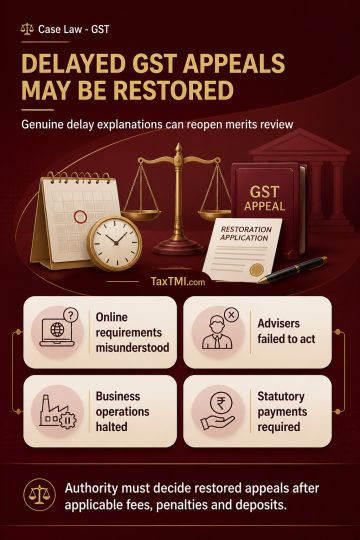
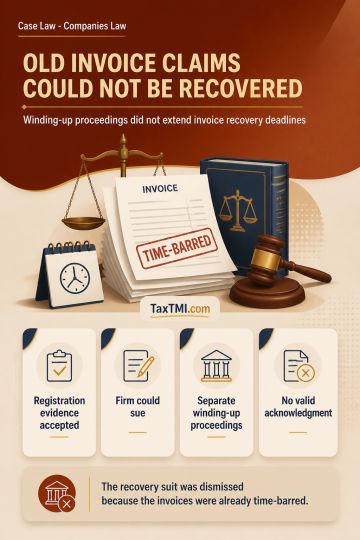
Invoice-based recovery claims remain time-barred despite separate winding-up proceedings, absent valid acknowledgment or part-payment of the disputed ...
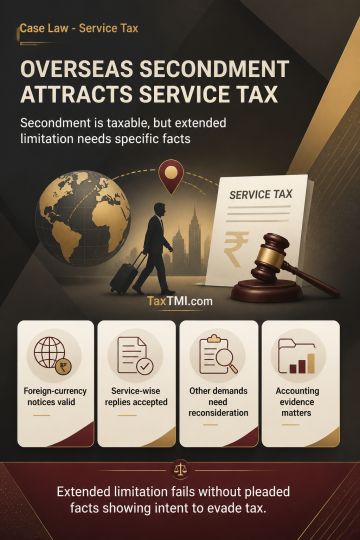
Extended limitation fails without specific suppression allegations, while overseas employee secondment remains taxable as manpower supply within norma...
Time-share accommodation classification excludes Club or Association Service where purchasers receive contractual occupancy rights without genuine mem...
CENVAT credit for trading requires reversal, while taxable-service rental credit remains proportionately available and limitation issues await resolut...
Vicarious liability for dishonoured company cheques may extend to non-signatory directors where complaints contain foundational responsibility avermen...
Dishonour of cheque - vicarious liability in criminal law - The SC interpreted Section 7 of the NI Act to identify the "drawer" as the individual issuing the cheque, establishing the drawer's primary obligation u/s 138 to maintain sufficient funds. The argument that directors or authorized signatories should be liable u/s 143A misinterprets statutory language and intent. The general rule against vicarious criminal liability underscores that individuals are not typically liable for others' acts unless specific provisions extend such liability. Section 141 extends liability to company officers for cheque dishonour, but liability arises from individual conduct, not merely position. The SC upheld the strict interpretation of "drawer" as the cheque issuer, excluding authorized signatories, aligning with legislative intent, precedents, and interpretation principles. The primary liability lies with the company, while management is vicariously liable u/s 141's conditions.
Dishonour of cheque - vicarious liability in criminal law - The SC interpreted Section 7 of the NI Act to identify the "drawer" as the individual issuing the cheque, establishing the drawer's primary obligation u/s 138 to maintain sufficient funds. The argument that directors or authorized signatories should be liable u/s 143A misinterprets statutory language and intent. The general rule against vicarious criminal liability underscores that individuals are not typically liable for others' acts unless specific provisions extend such liability. Section 141 extends liability to company officers for cheque dishonour, but liability arises from individual conduct, not merely position. The SC upheld the strict interpretation of "drawer" as the cheque issuer, excluding authorized signatories, aligning with legislative intent, precedents, and interpretation principles. The primary liability lies with the company, while management is vicariously liable u/s 141's conditions.
Note: It is a system-generated summary and is for quick reference only.
 TaxTMI
  TaxTMI
 of 4821











 Join Channel