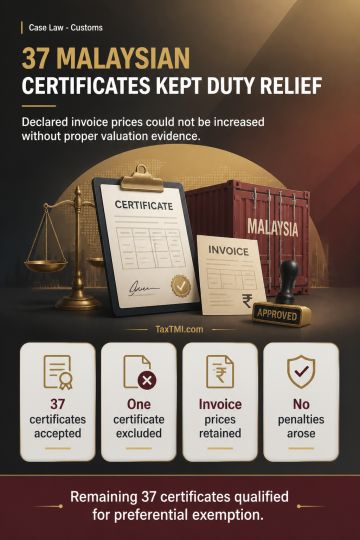
Country of Origin Certificates and declared transaction value supported preferential customs exemption where authenticity and invoice prices remained ...
Online bond platforms may offer overseas-regulated products and tax-specific bonds subject to disclosures, compliance safeguards and revised complianc...
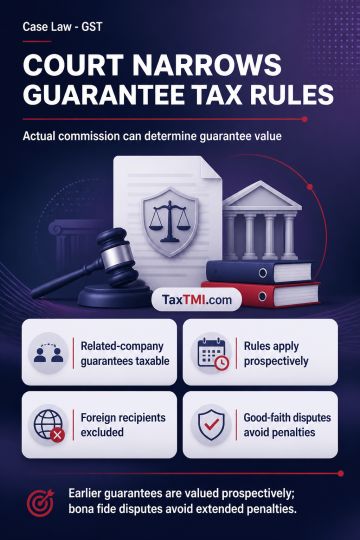
Corporate guarantee valuation permits actual ascertainable commission while barring retroactive application and extended-period penalties for bona fid...
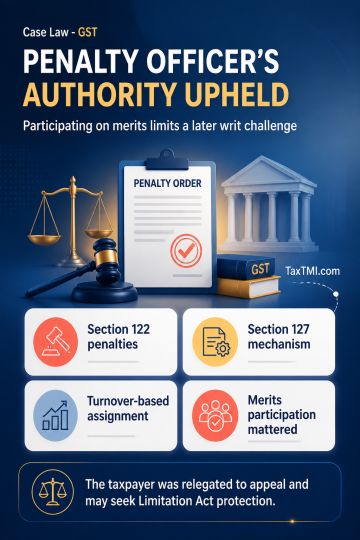
Proper-officer jurisdiction under UPGST penalty provisions upheld; participation on merits prevents bypassing the statutory appellate remedy through w...
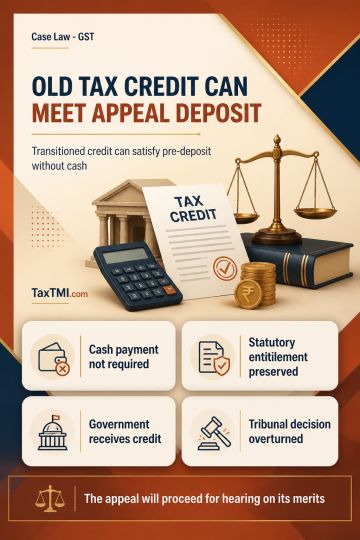
Transitioned CENVAT credit may validly satisfy mandatory pre-deposit requirements for legacy service tax appeals through Electronic Credit Ledger debi...
Dishonour of cheque - vicarious liability in criminal law - The SC interpreted Section 7 of the NI Act to identify the "drawer" as the individual issuing the cheque, establishing the drawer's primary obligation u/s 138 to maintain sufficient funds. The argument that directors or authorized signatories should be liable u/s 143A misinterprets statutory language and intent. The general rule against vicarious criminal liability underscores that individuals are not typically liable for others' acts unless specific provisions extend such liability. Section 141 extends liability to company officers for cheque dishonour, but liability arises from individual conduct, not merely position. The SC upheld the strict interpretation of "drawer" as the cheque issuer, excluding authorized signatories, aligning with legislative intent, precedents, and interpretation principles. The primary liability lies with the company, while management is vicariously liable u/s 141's conditions.
Dishonour of cheque - vicarious liability in criminal law - The SC interpreted Section 7 of the NI Act to identify the "drawer" as the individual issuing the cheque, establishing the drawer's primary obligation u/s 138 to maintain sufficient funds. The argument that directors or authorized signatories should be liable u/s 143A misinterprets statutory language and intent. The general rule against vicarious criminal liability underscores that individuals are not typically liable for others' acts unless specific provisions extend such liability. Section 141 extends liability to company officers for cheque dishonour, but liability arises from individual conduct, not merely position. The SC upheld the strict interpretation of "drawer" as the cheque issuer, excluding authorized signatories, aligning with legislative intent, precedents, and interpretation principles. The primary liability lies with the company, while management is vicariously liable u/s 141's conditions.
Note: It is a system-generated summary and is for quick reference only.
 TaxTMI
  TaxTMI
 of 4819






 Join Channel