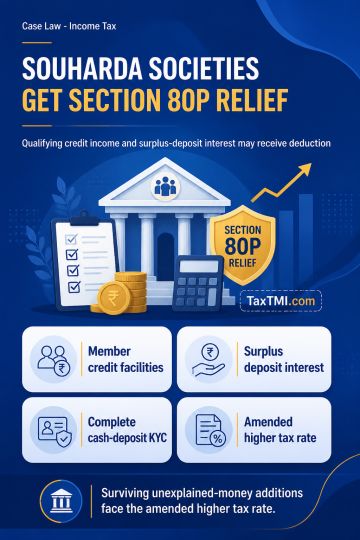
Section 80P deduction covers Souharda credit societies, including qualifying surplus-deposit interest, subject to member KYC verification for cash dep...
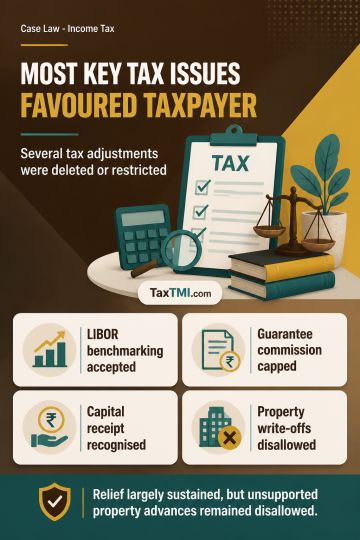
Transfer-pricing benchmarking and capital-receipt principles sustained taxpayer relief, while unsupported property-advance write-offs remained disallo...
Pre-existing operational debt disputes require genuine evidence, while undirected running-account payments may be appropriated on a first-in-first-out...
Agency in CNG distribution makes outlet operators commission agents, rendering taxable Business Auxiliary Service rather than purchasing goods for res...
The assessee company was denied exemption under Article 13(3B) and 13(4) of the India-Mauritius Treaty, and its capital gains from sale of shares, futures, and options were taxed, as its control and management were found to lie outside Mauritius in UAE, with the beneficial owner being a UAE resident. However, the CIT(A) held the assessee eligible for the India-Mauritius treaty benefit. The ITAT upheld the CIT(A)'s decision, finding no conclusive evidence that the assessee's control and management were outside Mauritius or that the beneficial owner was a UAE resident. The assessee had Mauritius-resident directors, held board meetings in Mauritius, had a valid TRC, Category 1 Global Business License, and SEBI registration, proving its Mauritius tax residency. The protocol amending the treaty was not applicable as it had not come into force. The ITAT relied on Supreme Court's Azadi Bachao Andolan case principles and CBDT Circular 789/2000 while interpreting the treaty.
The assessee company was denied exemption under Article 13(3B) and 13(4) of the India-Mauritius Treaty, and its capital gains from sale of shares, futures, and options were taxed, as its control and management were found to lie outside Mauritius in UAE, with the beneficial owner being a UAE resident. However, the CIT(A) held the assessee eligible for the India-Mauritius treaty benefit. The ITAT upheld the CIT(A)'s decision, finding no conclusive evidence that the assessee's control and management were outside Mauritius or that the beneficial owner was a UAE resident. The assessee had Mauritius-resident directors, held board meetings in Mauritius, had a valid TRC, Category 1 Global Business License, and SEBI registration, proving its Mauritius tax residency. The protocol amending the treaty was not applicable as it had not come into force. The ITAT relied on Supreme Court's Azadi Bachao Andolan case principles and CBDT Circular 789/2000 while interpreting the treaty.
Note: It is a system-generated summary and is for quick reference only.
 TaxTMI
  TaxTMI
 of 4817











 Join Channel