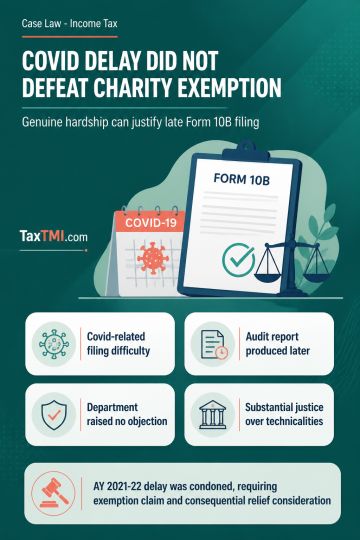
Belated Form 10B filing during Covid-19 cannot defeat charitable exemption where genuine hardship warrants condonation and substantial justice prevail...
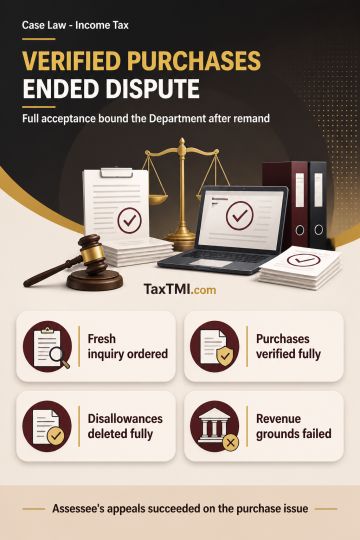
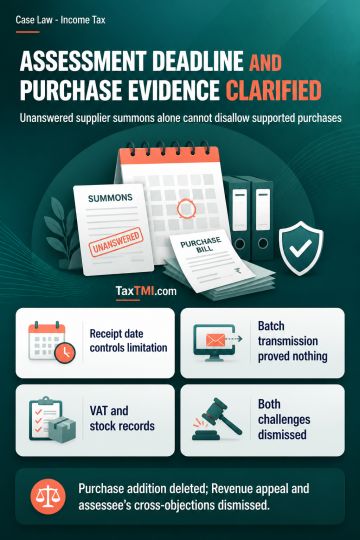
Limitation for consequential assessments runs from prescribed authority receipt, while verified purchases cannot be disallowed merely for unanswered s...
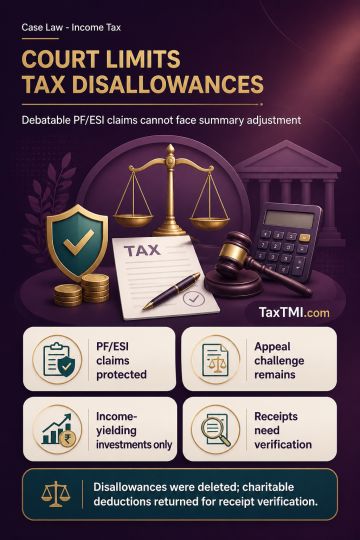
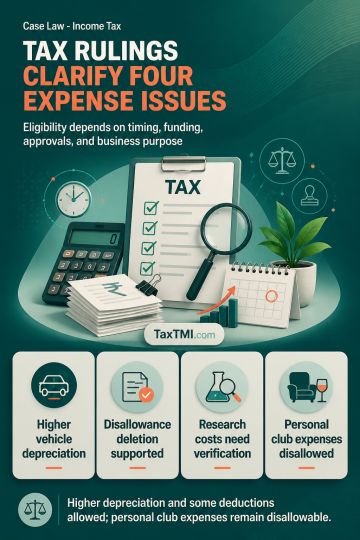
Higher depreciation for qualifying commercial vehicles, exempt-income disallowance, research deduction verification, and club-expense treatment clarif...
Charitable registration renewal cannot become an assessment of receipts, profitability or annual exemption compliance, requiring renewal and donation ...
AMP expenditure for own business is not an international transaction without an associated-enterprise arrangement, eliminating transfer pricing adjust...
The assessee company was denied exemption under Article 13(3B) and 13(4) of the India-Mauritius Treaty, and its capital gains from sale of shares, futures, and options were taxed, as its control and management were found to lie outside Mauritius in UAE, with the beneficial owner being a UAE resident. However, the CIT(A) held the assessee eligible for the India-Mauritius treaty benefit. The ITAT upheld the CIT(A)'s decision, finding no conclusive evidence that the assessee's control and management were outside Mauritius or that the beneficial owner was a UAE resident. The assessee had Mauritius-resident directors, held board meetings in Mauritius, had a valid TRC, Category 1 Global Business License, and SEBI registration, proving its Mauritius tax residency. The protocol amending the treaty was not applicable as it had not come into force. The ITAT relied on Supreme Court's Azadi Bachao Andolan case principles and CBDT Circular 789/2000 while interpreting the treaty.
The assessee company was denied exemption under Article 13(3B) and 13(4) of the India-Mauritius Treaty, and its capital gains from sale of shares, futures, and options were taxed, as its control and management were found to lie outside Mauritius in UAE, with the beneficial owner being a UAE resident. However, the CIT(A) held the assessee eligible for the India-Mauritius treaty benefit. The ITAT upheld the CIT(A)'s decision, finding no conclusive evidence that the assessee's control and management were outside Mauritius or that the beneficial owner was a UAE resident. The assessee had Mauritius-resident directors, held board meetings in Mauritius, had a valid TRC, Category 1 Global Business License, and SEBI registration, proving its Mauritius tax residency. The protocol amending the treaty was not applicable as it had not come into force. The ITAT relied on Supreme Court's Azadi Bachao Andolan case principles and CBDT Circular 789/2000 while interpreting the treaty.
Note: It is a system-generated summary and is for quick reference only.
 TaxTMI
 of 4807







 Join Channel


 TaxTMI