Nature-dependent electricity contracts receive new Ind AS accounting, hedge designation, transition and financial-statement disclosure requirements fr...
Alternative GST remedy permitted protective writ intervention for ex parte adjudication, preserving independent appellate review of input tax credit d...
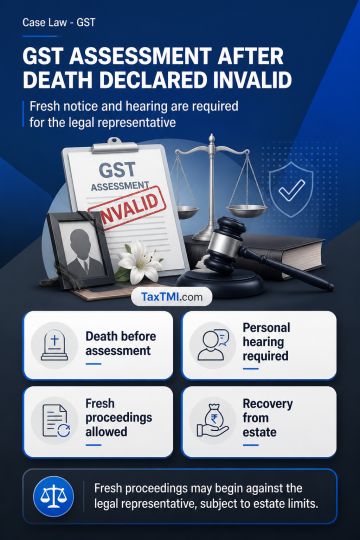
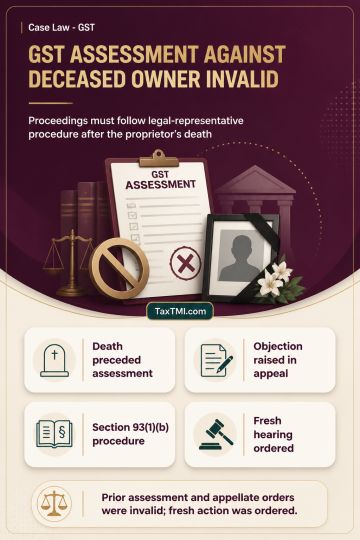
Assessment against deceased sole proprietor requires proceedings against the legal representative, rendering prior assessment and appellate orders inv...
Residential waste collection classification under SAC 999423 defeats composite-supply exemption where facilitating goods are not transferred to the lo...
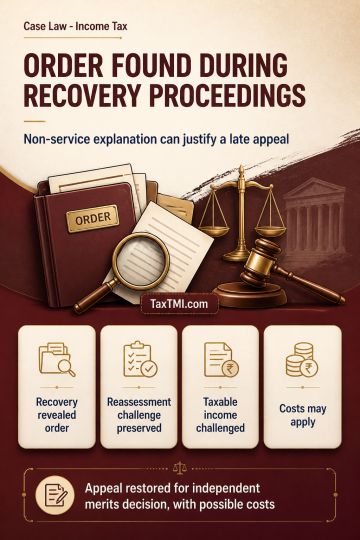
Condonation of delay permits statutory appeal restoration where inadequate service explanation prevented consideration of reassessment and taxable-inc...
The assessee company was denied exemption under Article 13(3B) and 13(4) of the India-Mauritius Treaty, and its capital gains from sale of shares, futures, and options were taxed, as its control and management were found to lie outside Mauritius in UAE, with the beneficial owner being a UAE resident. However, the CIT(A) held the assessee eligible for the India-Mauritius treaty benefit. The ITAT upheld the CIT(A)'s decision, finding no conclusive evidence that the assessee's control and management were outside Mauritius or that the beneficial owner was a UAE resident. The assessee had Mauritius-resident directors, held board meetings in Mauritius, had a valid TRC, Category 1 Global Business License, and SEBI registration, proving its Mauritius tax residency. The protocol amending the treaty was not applicable as it had not come into force. The ITAT relied on Supreme Court's Azadi Bachao Andolan case principles and CBDT Circular 789/2000 while interpreting the treaty.
The assessee company was denied exemption under Article 13(3B) and 13(4) of the India-Mauritius Treaty, and its capital gains from sale of shares, futures, and options were taxed, as its control and management were found to lie outside Mauritius in UAE, with the beneficial owner being a UAE resident. However, the CIT(A) held the assessee eligible for the India-Mauritius treaty benefit. The ITAT upheld the CIT(A)'s decision, finding no conclusive evidence that the assessee's control and management were outside Mauritius or that the beneficial owner was a UAE resident. The assessee had Mauritius-resident directors, held board meetings in Mauritius, had a valid TRC, Category 1 Global Business License, and SEBI registration, proving its Mauritius tax residency. The protocol amending the treaty was not applicable as it had not come into force. The ITAT relied on Supreme Court's Azadi Bachao Andolan case principles and CBDT Circular 789/2000 while interpreting the treaty.
Note: It is a system-generated summary and is for quick reference only.
 TaxTMI
  TaxTMI
 of 4809











 Join Channel


