Mutual fund maturity rules require proper rollover, redemption, disclosure, and due diligence; investor gains cannot excuse regulatory breaches or pen...
Threshold exemption excludes exempt services, while stamp-paper purchases avoid reverse charge; consequential service tax penalties were also set asid...
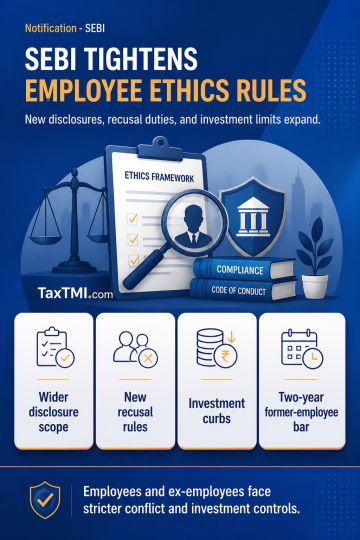
Employee conflict disclosures and investment restrictions expand with new recusal duties, post-employment limits, and compliance reporting requirement...
The court held that the Registrar of Companies (ROC) had the power to strike off the name of a company from the Register u/s 560(1)(6) of the old Companies Act, 1956, which is pari materia with Section 248 of the new Companies Act, 2013. The provisions under the old and new Acts are consistent, with the new Act providing a more detailed procedure for striking off and an effective remedy for dealing with deregistration of non-operational companies. The registers maintained under the old Act are deemed to be maintained under the new Act. The petitioner's remedy lies with the National Company Law Tribunal under Chapter XXVII of the Companies Act, 2013. Therefore, the application was dismissed.
The court held that the Registrar of Companies (ROC) had the power to strike off the name of a company from the Register u/s 560(1)(6) of the old Companies Act, 1956, which is pari materia with Section 248 of the new Companies Act, 2013. The provisions under the old and new Acts are consistent, with the new Act providing a more detailed procedure for striking off and an effective remedy for dealing with deregistration of non-operational companies. The registers maintained under the old Act are deemed to be maintained under the new Act. The petitioner's remedy lies with the National Company Law Tribunal under Chapter XXVII of the Companies Act, 2013. Therefore, the application was dismissed.
Note: It is a system-generated summary and is for quick reference only.
 TaxTMI
  TaxTMI
 of 4816



















 Join Channel


