Development agreements require legal possession or effective enjoyment for capital gains transfer; permissive possession and deferred consideration de...
Prolonged sterilisation of development rights supports capital-gains treatment, while business-income disallowances cannot govern capital-gains comput...
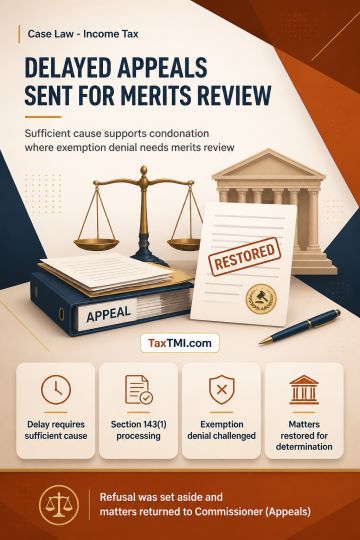
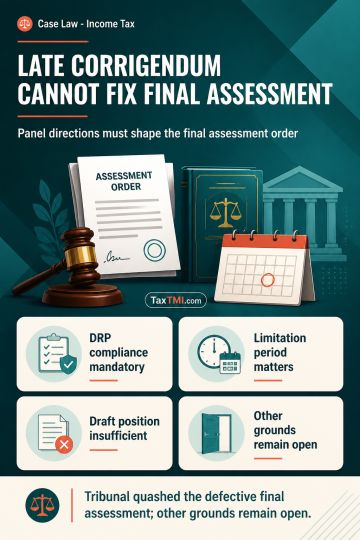
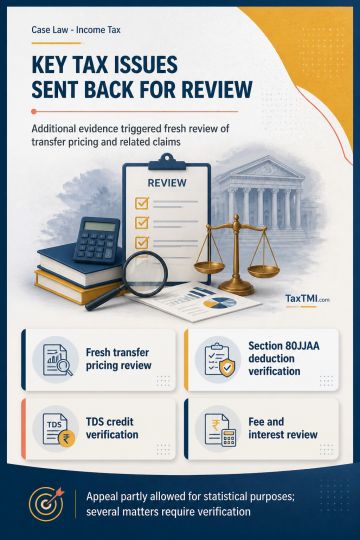
Additional evidence in transfer pricing dispute leads to fresh examination, while tax deductions, TDS credit, fee and refund interest require verifica...
Category II AIF pass-through taxation preserves non-business income character; investment receipts cannot be reclassified without applying recognised ...
Page of 4814
Press 'Enter' after typing page number.
1461 to 1480 of 96262 Results
❮
❯
❯❯
0 / 200
Expand Note
Add to Folder
No Folders have been created
+
Are you sure you want to delete "My most important" ?
The court held that the Registrar of Companies (ROC) had the power to strike off the name of a company from the Register u/s 560(1)(6) of the old Companies Act, 1956, which is pari materia with Section 248 of the new Companies Act, 2013. The provisions under the old and new Acts are consistent, with the new Act providing a more detailed procedure for striking off and an effective remedy for dealing with deregistration of non-operational companies. The registers maintained under the old Act are deemed to be maintained under the new Act. The petitioner's remedy lies with the National Company Law Tribunal under Chapter XXVII of the Companies Act, 2013. Therefore, the application was dismissed.
The court held that the Registrar of Companies (ROC) had the power to strike off the name of a company from the Register u/s 560(1)(6) of the old Companies Act, 1956, which is pari materia with Section 248 of the new Companies Act, 2013. The provisions under the old and new Acts are consistent, with the new Act providing a more detailed procedure for striking off and an effective remedy for dealing with deregistration of non-operational companies. The registers maintained under the old Act are deemed to be maintained under the new Act. The petitioner's remedy lies with the National Company Law Tribunal under Chapter XXVII of the Companies Act, 2013. Therefore, the application was dismissed.
Note: It is a system-generated summary and is for quick reference only.
 TaxTMI
  TaxTMI
 of 4814












 Join Channel