Transfer pricing and tax deductions upheld on established principles, while employee contributions and warranty provisions returned for fresh examinat...
Captive transfer pricing relies on industrial consumer tariffs, while genuine quotations can benchmark effluent treatment transfers under the Other Me...
Specific tariff classification for ophthalmic instruments and extended limitation principles determine the treatment of duty demands, confiscation, an...
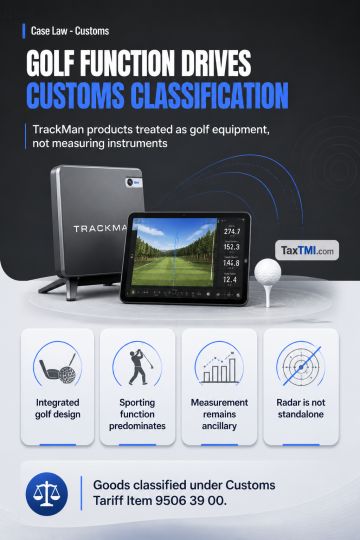
Integrated golf function determines classification, placing launch monitors and simulators under other golf equipment rather than measuring instrument...
Public servant status under anti-corruption law extends to recognised stock exchange leadership; constitutional and sanction challenges do not succeed...
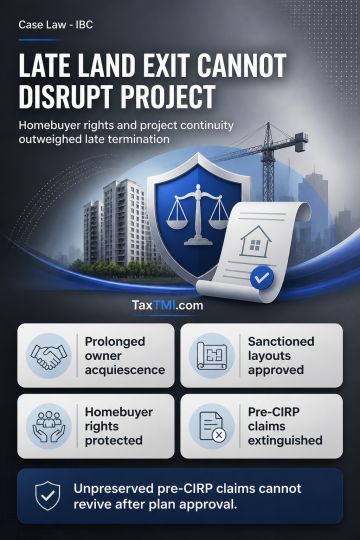
Acquiescence, homebuyer protection and clean-slate resolution principles prevent landowners from disrupting an integrated project through late termina...
The appellant was issued penalty u/r 26(2) of Central Excise Rules, 2002, alleging that second stage dealers based in Jaipur were issuing cenvatable invoices to the main noticee without delivering goods, which were purchased from first stage dealers and manufactured by non-existent or non-working manufacturers. The Commissioner (Appeals) recorded categorical findings that the main noticee had duly received goods and made duty payment. Tribunal held that when the demand for cenvat credit itself is not maintainable, there is no justification to affirm penalty on the appellant. Following the principles enunciated by Division Bench in Drolia Electrosteel case, where department accepted findings of Commissioner (Appeals), there is no justification to uphold penalty imposition on appellant. The impugned order was set aside and appeal allowed.
The appellant was issued penalty u/r 26(2) of Central Excise Rules, 2002, alleging that second stage dealers based in Jaipur were issuing cenvatable invoices to the main noticee without delivering goods, which were purchased from first stage dealers and manufactured by non-existent or non-working manufacturers. The Commissioner (Appeals) recorded categorical findings that the main noticee had duly received goods and made duty payment. Tribunal held that when the demand for cenvat credit itself is not maintainable, there is no justification to affirm penalty on the appellant. Following the principles enunciated by Division Bench in Drolia Electrosteel case, where department accepted findings of Commissioner (Appeals), there is no justification to uphold penalty imposition on appellant. The impugned order was set aside and appeal allowed.
Note: It is a system-generated summary and is for quick reference only.
 TaxTMI
  TaxTMI
 of 4811













 Join Channel


