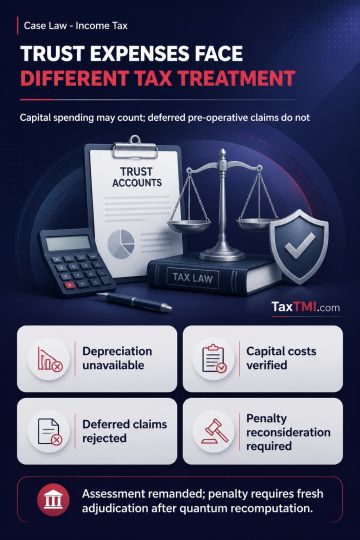
Charitable trust income application permits verified capital expenditure but rejects deferred pre-operative claims and requires reconsideration of con...
Reinsurance premium deductions require established regulatory breaches, while independently acquired software qualifies within the computer depreciati...
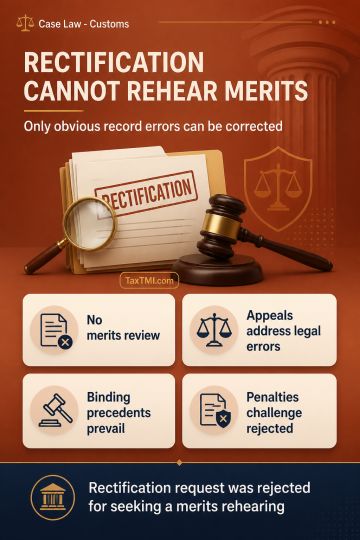
Rectification of mistake remains limited to self-evident record errors, preventing merits review through miscellaneous applications and preserving fin...
Tender creditworthiness conditions may extend to de facto Promoter Directors, with post-participation challenges generally barred absent arbitrariness...
Corporate representation in PMLA summons proceedings permitted through an authorised signatory, subject to directors' continuing cooperation and atten...
Page of 4801
Press 'Enter' after typing page number.
861 to 880 of 96001 Results
❮
❯
❯❯
0 / 200
Expand Note
Add to Folder
No Folders have been created
+
Are you sure you want to delete "My most important" ?
The Court held that the builder had forfeited its right to file a written statement, but its right to participate in the proceedings was protected. The rigour of the rule of pleadings under the Code of Civil Procedure mandates that no pleading shall raise any new ground or contain allegations inconsistent with previous pleadings. The builder did not seek permission to cross-examine the witness or raise grievance of denial of such opportunity. The builder could be permitted only to argue legal questions, lapses, and non-admissibility of evidence. The Court found no error in the NCDRC's decision, as the builder could not bring forth anything admissible due to the forfeiture order. The appeal was partly allowed, modifying the formula for payment of compensation for delay in handing over possession of flats, directing the developer to pay interest at 6% per annum from the due date till the date of offering possession.
The Court held that the builder had forfeited its right to file a written statement, but its right to participate in the proceedings was protected. The rigour of the rule of pleadings under the Code of Civil Procedure mandates that no pleading shall raise any new ground or contain allegations inconsistent with previous pleadings. The builder did not seek permission to cross-examine the witness or raise grievance of denial of such opportunity. The builder could be permitted only to argue legal questions, lapses, and non-admissibility of evidence. The Court found no error in the NCDRC's decision, as the builder could not bring forth anything admissible due to the forfeiture order. The appeal was partly allowed, modifying the formula for payment of compensation for delay in handing over possession of flats, directing the developer to pay interest at 6% per annum from the due date till the date of offering possession.
Note: It is a system-generated summary and is for quick reference only.
 TaxTMI
 of 4801


















 Join Channel


 TaxTMI
