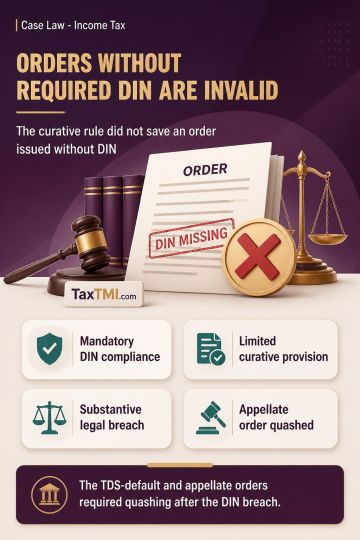
Document Identification Number compliance renders TDS-default orders invalid where mandatory DIN requirements are breached and curative provision does...
The expenditure towards environmental compensation was debated as penal or compensatory in nature. The adjustment u/s 143(1)(a) was challenged. It was held that such a question cannot fall within the ambit of Section 143(1), where only arithmetical mistakes and incorrect claim adjustments are to be examined by software during return processing. If the assessment was scrutinized and the Assessing Officer confronted the assessee, the issue could have been decided differently. However, in a Section 143(1) proceeding, such disallowance cannot be made without examining the Pollution Control Board's order directing the payment. Every payment by the assessee would not be penal, therefore, the disallowance was unsustainable. The ground of appeal was allowed, and the disallowance was deleted.
The expenditure towards environmental compensation was debated as penal or compensatory in nature. The adjustment u/s 143(1)(a) was challenged. It was held that such a question cannot fall within the ambit of Section 143(1), where only arithmetical mistakes and incorrect claim adjustments are to be examined by software during return processing. If the assessment was scrutinized and the Assessing Officer confronted the assessee, the issue could have been decided differently. However, in a Section 143(1) proceeding, such disallowance cannot be made without examining the Pollution Control Board's order directing the payment. Every payment by the assessee would not be penal, therefore, the disallowance was unsustainable. The ground of appeal was allowed, and the disallowance was deleted.
Note: It is a system-generated summary and is for quick reference only.
 TaxTMI
  TaxTMI
 of 4918