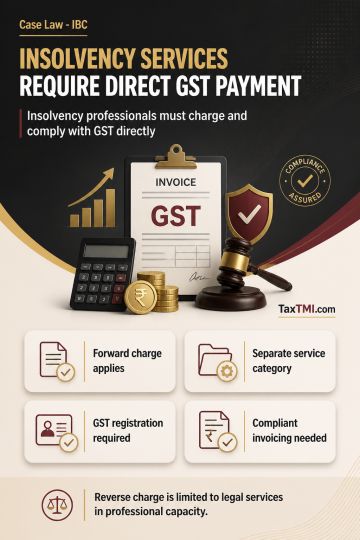
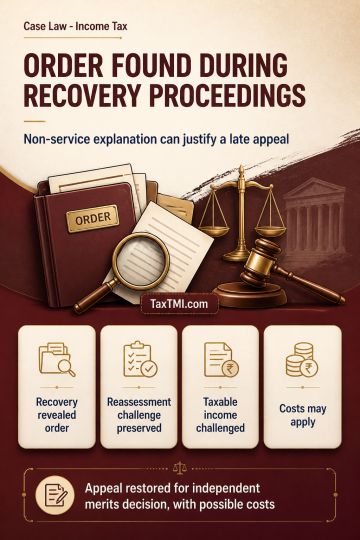
Condonation of delay permits statutory appeal restoration where inadequate service explanation prevented consideration of reassessment and taxable-inc...
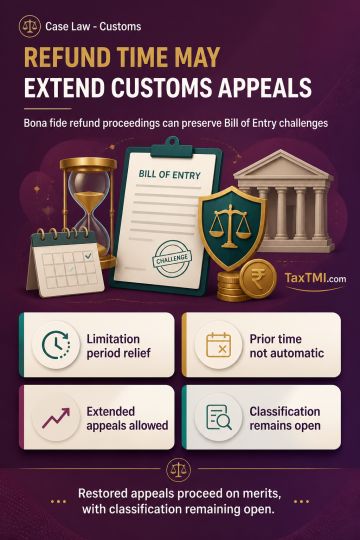
Limitation in customs appeals permits exclusion for bona fide refund proceedings, enabling restoration of Bill of Entry assessment challenges on merit...
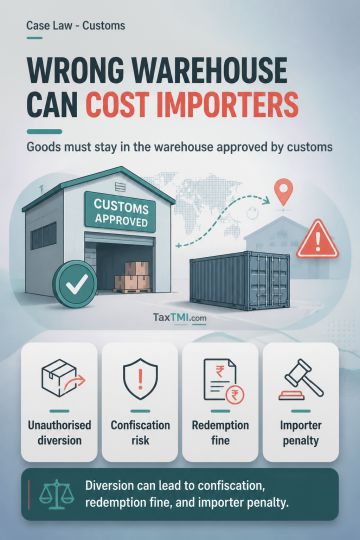
Warehousing permission requires deposit at the designated bonded warehouse; unauthorised diversion triggers confiscation, redemption fine and importer...
Petitioner challenged order passed u/s 129(3) of Goods and...
E-way Bill: Typographical error not indicative of tax evasion intent. Active GSTIN, residential address not adverse. Penalty quashed for lack of evidence.
Contents
Summary
Note
Bookmark
Share
✓ Copied successfully !
Print
Print Options
For full text, please login
Login to TaxTMI
Verification Pending
The Email Id has not been verified. Click on the link we have sent on
Petitioner challenged order passed u/s 129(3) of Goods and Services Tax Act, 2017 for alleged tax evasion due to typographical error in date on E-way Bill and Tax Invoice. Court held typographical error was bona fide, not indicative of mens rea to evade tax, essential for imposing penalty. Selling dealer had active GSTIN, no adverse inference permissible merely because office address was residential. Impugned order set aside based on conjectures without cogent evidence of tax evasion. Petition allowed.
Petitioner challenged order passed u/s 129(3) of Goods and Services Tax Act, 2017 for alleged tax evasion due to typographical error in date on E-way Bill and Tax Invoice. Court held typographical error was bona fide, not indicative of mens rea to evade tax, essential for imposing penalty. Selling dealer had active GSTIN, no adverse inference permissible merely because office address was residential. Impugned order set aside based on conjectures without cogent evidence of tax evasion. Petition allowed.
Note: It is a system-generated summary and is for quick reference only.
 TaxTMI
 of 4798




 Join Channel


 TaxTMI