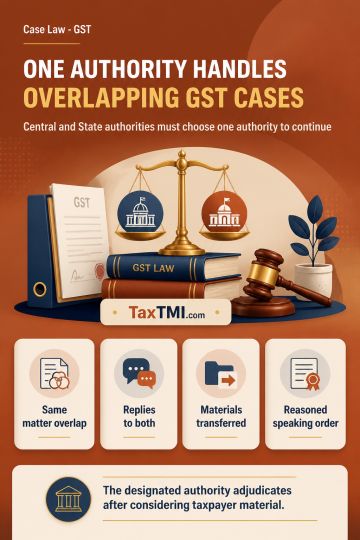
Overlapping GST proceedings require Central and State authorities to designate one competent authority for coordinated adjudication of the same matter...
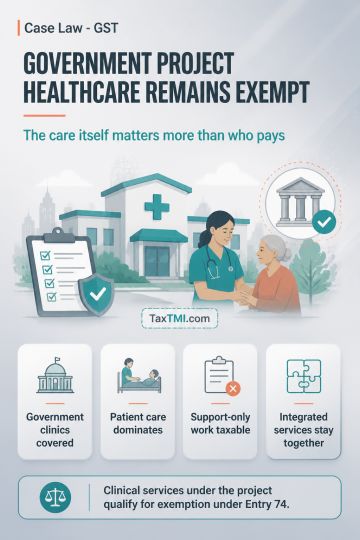
Composite healthcare supplies retain exemption when patient care is the contract's essential character, despite payment through an implementing agency...
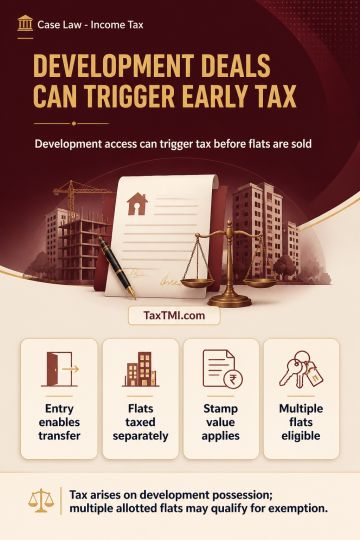
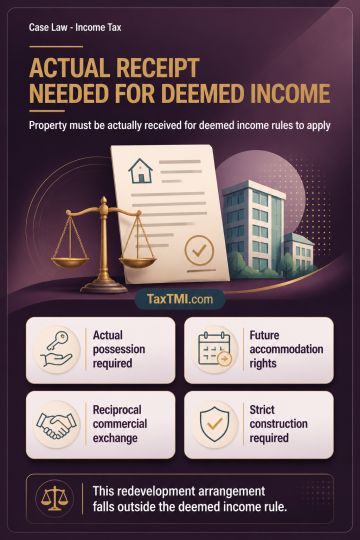
Receipt of immovable property requires actual possession or enjoyment; redevelopment allotments exchanged for tenancy rights fall outside deemed incom...
Petitioner challenged order passed u/s 129(3) of Goods and...
E-way Bill: Typographical error not indicative of tax evasion intent. Active GSTIN, residential address not adverse. Penalty quashed for lack of evidence.
Contents
Summary
Note
Bookmark
Share
✓ Copied successfully !
Print
Print Options
For full text, please login
Login to TaxTMI
Verification Pending
The Email Id has not been verified. Click on the link we have sent on
Petitioner challenged order passed u/s 129(3) of Goods and Services Tax Act, 2017 for alleged tax evasion due to typographical error in date on E-way Bill and Tax Invoice. Court held typographical error was bona fide, not indicative of mens rea to evade tax, essential for imposing penalty. Selling dealer had active GSTIN, no adverse inference permissible merely because office address was residential. Impugned order set aside based on conjectures without cogent evidence of tax evasion. Petition allowed.
Petitioner challenged order passed u/s 129(3) of Goods and Services Tax Act, 2017 for alleged tax evasion due to typographical error in date on E-way Bill and Tax Invoice. Court held typographical error was bona fide, not indicative of mens rea to evade tax, essential for imposing penalty. Selling dealer had active GSTIN, no adverse inference permissible merely because office address was residential. Impugned order set aside based on conjectures without cogent evidence of tax evasion. Petition allowed.
Note: It is a system-generated summary and is for quick reference only.
 TaxTMI
 of 4805




 Join Channel


 TaxTMI