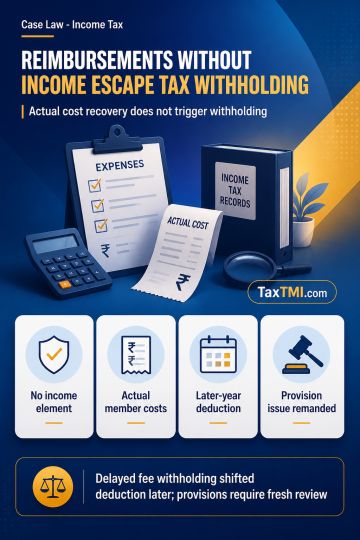
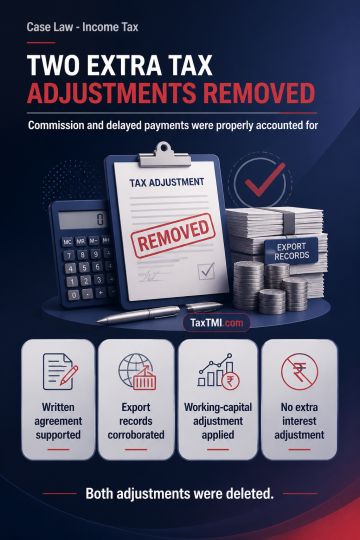
Pure reimbursement without income element escapes tax withholding, while delayed withholding and unsupported provisions face deferred or renewed scrut...
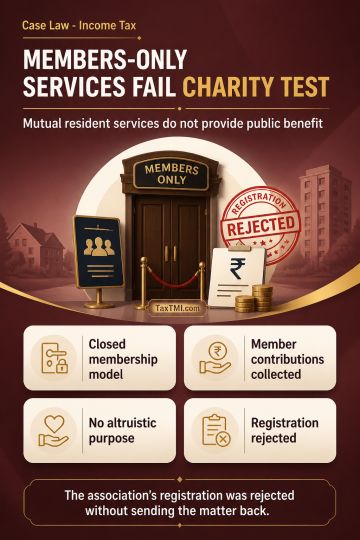
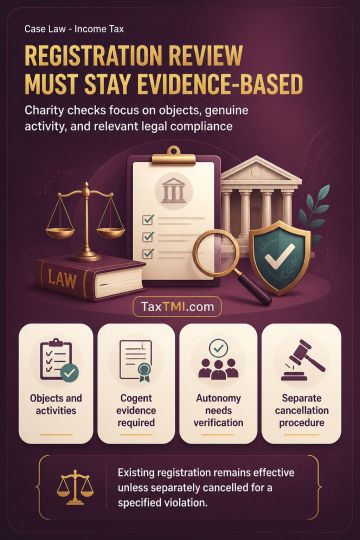
Public benefit requirement defeats charitable registration where residents' association services are reciprocal, member-only facilities governed by mu...
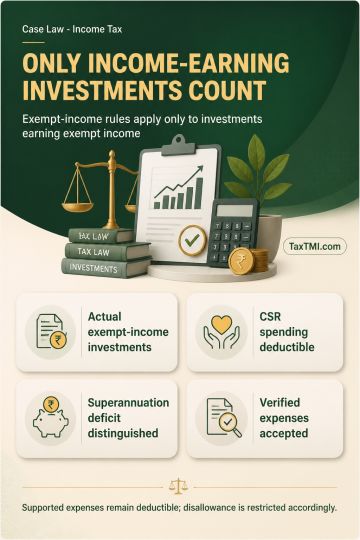
Exempt-income expenditure disallowance is confined to investments that actually generated exempt income, while supported business expenses remain dedu...
Objective characteristics and principal use govern mining-tyre classification, while fresh advance ruling applications may rely on additional technica...
In cases of spectrum allocation where the telecom operator opts for deferred payment instalments as per the Frequency Assignment Letter (FAL) issued by Department of Telecommunications (DoT), it constitutes a continuous supply of services. The time of supply and GST payment liability arises when the instalment payments are due or made, whichever is earlier. For upfront full payment, GST is payable when the payment is made or due, whichever is earlier. Similar treatment applies to allocation of other natural resources by the government with deferred payment options, constituting continuous supply of services under GST law.
In cases of spectrum allocation where the telecom operator opts for deferred payment instalments as per the Frequency Assignment Letter (FAL) issued by Department of Telecommunications (DoT), it constitutes a continuous supply of services. The time of supply and GST payment liability arises when the instalment payments are due or made, whichever is earlier. For upfront full payment, GST is payable when the payment is made or due, whichever is earlier. Similar treatment applies to allocation of other natural resources by the government with deferred payment options, constituting continuous supply of services under GST law.
Note: It is a system-generated summary and is for quick reference only.
 TaxTMI
 of 4803




 Join Channel


 TaxTMI
