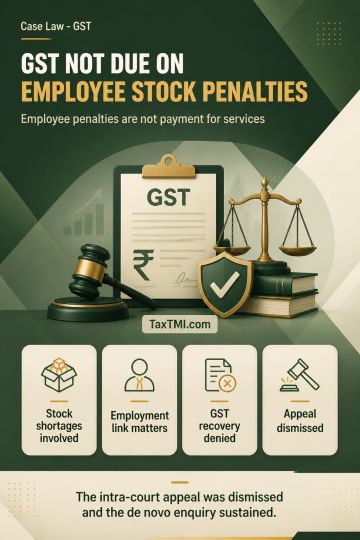
Employee stock-shortage penalties do not constitute consideration for services, preventing GST collection under Schedule II in employment relationship...
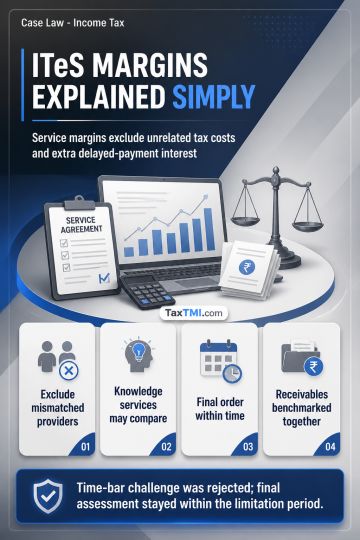
Transfer-pricing treatment of ITeS margins excludes pass-through tax recoveries and separate delayed-receivables interest after working-capital adjust...
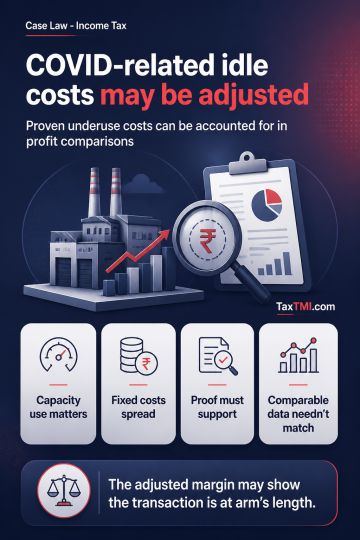
Capacity-utilisation adjustments under TNMM can neutralise substantiated COVID-related idle costs where underutilisation materially affects profitabil...
Page of 4828
Press 'Enter' after typing page number.
181 to 200 of 96556 Results
❮
❯
❯❯
0 / 200
Expand Note
Add to Folder
No Folders have been created
+
Are you sure you want to delete "My most important" ?
The assessee delayed filing an appeal before the Commissioner of Income Tax (Appeals) (CIT(A)) by 1008 days, citing changes in administrative staff and management roles post-COVID as reasons. However, the COVID pandemic subsided in March 2022, yet the assessee filed the appeal in November 2022, a delay of eight months without valid justification. The assessee's representative merely stated illness of a partner and administrative problems, which were deemed insufficient reasons. According to Section 9 of the Limitation Act, once the limitation period commences, subsequent disabilities or inability do not stop it. The limitation period began on 02.09.2019, and the 1008-day delay in filing the appeal before the CIT(A) was not condoned due to lack of sufficient cause. Consequently, the assessee's appeal was dismissed.
The assessee delayed filing an appeal before the Commissioner of Income Tax (Appeals) (CIT(A)) by 1008 days, citing changes in administrative staff and management roles post-COVID as reasons. However, the COVID pandemic subsided in March 2022, yet the assessee filed the appeal in November 2022, a delay of eight months without valid justification. The assessee's representative merely stated illness of a partner and administrative problems, which were deemed insufficient reasons. According to Section 9 of the Limitation Act, once the limitation period commences, subsequent disabilities or inability do not stop it. The limitation period began on 02.09.2019, and the 1008-day delay in filing the appeal before the CIT(A) was not condoned due to lack of sufficient cause. Consequently, the assessee's appeal was dismissed.
Note: It is a system-generated summary and is for quick reference only.
 TaxTMI
  TaxTMI
 of 4828



 Join Channel


