Retention of seized property survives where recorded reasons support proceeds of crime, while stayed investigation periods are excluded from limitatio...
Specified income of Baddi Barotiwala Nalagarh Development Authority receives conditional tax exemption, retrospectively covering its designated assess...
Specified development authority income receives retrospective tax exemption, subject to non-commercial activity, unchanged income sources, and return-...
Unified Brand India framework introduces voluntary Trust Mark certification and funding support for export branding, packaging and global promotional ...
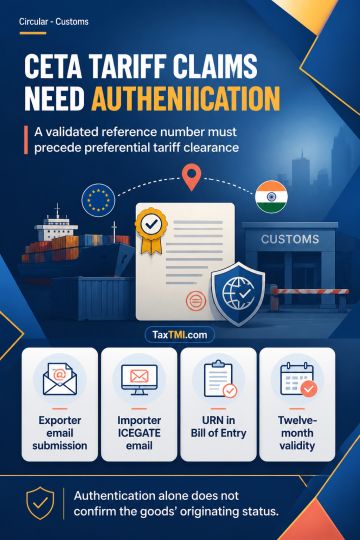
Origin Declaration authentication governs preferential tariff claims under India-UK CETA, requiring a validated reference number before import clearan...
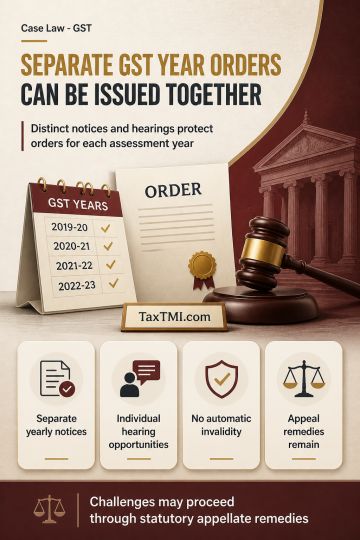
Separate assessment orders for different years remain valid when distinct notices and hearing opportunities prevent prejudice from combined proceeding...
The circular provides a Standard Operating Procedure (SOP) for cancellation of GST registration of non-genuine taxpayers and creation of a repository of such entities. It outlines the background, legal provisions, procedure for cancellation initiated by the officer or on application, collection of evidence during investigation/inspection, preparation of evidence folders, sharing with authorities, and maintaining a repository by the Business Intelligence Unit (BIU). The aim is to curb the menace of fake invoices, wrongful ITC availment, and identify generators and users through risk parameters. It emphasizes thorough scrutiny, collection of evidence, recording statements, and reasoned orders for cancellation to safeguard government revenue.
The circular provides a Standard Operating Procedure (SOP) for cancellation of GST registration of non-genuine taxpayers and creation of a repository of such entities. It outlines the background, legal provisions, procedure for cancellation initiated by the officer or on application, collection of evidence during investigation/inspection, preparation of evidence folders, sharing with authorities, and maintaining a repository by the Business Intelligence Unit (BIU). The aim is to curb the menace of fake invoices, wrongful ITC availment, and identify generators and users through risk parameters. It emphasizes thorough scrutiny, collection of evidence, recording statements, and reasoned orders for cancellation to safeguard government revenue.
Note: It is a system-generated summary and is for quick reference only.
 TaxTMI
 of 4805
















 Join Channel


 TaxTMI
