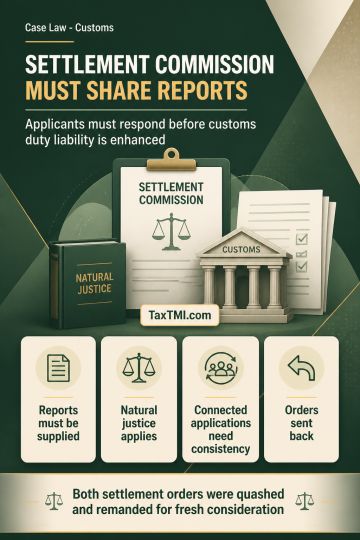
Opportunity to respond to jurisdictional reports is mandatory before customs settlement duty enhancement; connected applications require consistent ad...
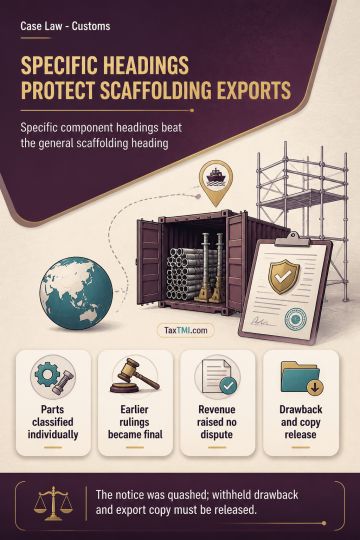
Specific customs headings for scaffolding components prevail over general classification, invalidating misclassification proceedings and enabling with...
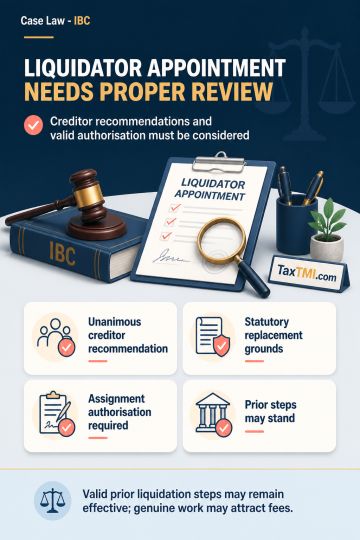
Liquidator appointment under Section 34 requires consideration of creditor recommendations, valid professional authorisation, and preservation of vali...
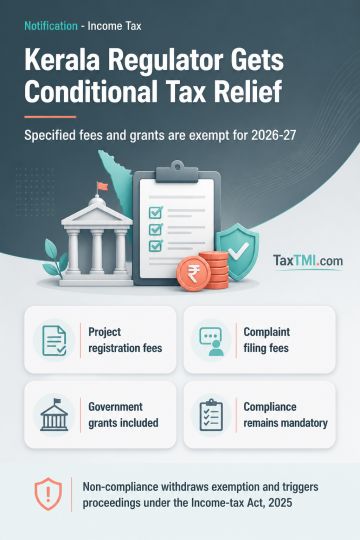
Income-tax exemption for specified regulatory fees and government grants applies subject to non-commercial activity and continuing compliance conditio...
Digital accessibility audit and remediation deadlines extended, while all other disability-compliance obligations for regulated entities remain unchan...
Page of 4803
Press 'Enter' after typing page number.
621 to 640 of 96047 Results
❮
❯
❯❯
0 / 200
Expand Note
Add to Folder
No Folders have been created
+
Are you sure you want to delete "My most important" ?
The circular provides a Standard Operating Procedure (SOP) for cancellation of GST registration of non-genuine taxpayers and creation of a repository of such entities. It outlines the background, legal provisions, procedure for cancellation initiated by the officer or on application, collection of evidence during investigation/inspection, preparation of evidence folders, sharing with authorities, and maintaining a repository by the Business Intelligence Unit (BIU). The aim is to curb the menace of fake invoices, wrongful ITC availment, and identify generators and users through risk parameters. It emphasizes thorough scrutiny, collection of evidence, recording statements, and reasoned orders for cancellation to safeguard government revenue.
The circular provides a Standard Operating Procedure (SOP) for cancellation of GST registration of non-genuine taxpayers and creation of a repository of such entities. It outlines the background, legal provisions, procedure for cancellation initiated by the officer or on application, collection of evidence during investigation/inspection, preparation of evidence folders, sharing with authorities, and maintaining a repository by the Business Intelligence Unit (BIU). The aim is to curb the menace of fake invoices, wrongful ITC availment, and identify generators and users through risk parameters. It emphasizes thorough scrutiny, collection of evidence, recording statements, and reasoned orders for cancellation to safeguard government revenue.
Note: It is a system-generated summary and is for quick reference only.
 TaxTMI
 of 4803





 Join Channel


 TaxTMI