Service of notice and contractual debt acknowledgment preserved insolvency admission against a corporate guarantor despite limitation and natural just...
Original works exemption excludes standalone boulder transportation, leaving subcontracted railway-project transport services subject to service tax l...
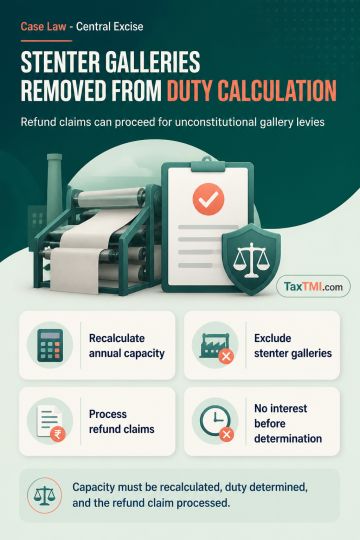
Annual production capacity determinations excluding stenter galleries support refunds for unconstitutional excise levies without an unjust-enrichment ...
Vicarious liability for cheque dishonour requires specific allegations of responsibility and cheque signatory; generic director allegations cannot sus...
IT Resilience Index requires market infrastructure institutions to automate resilience scoring, early warnings, and continuous service-delivery monito...
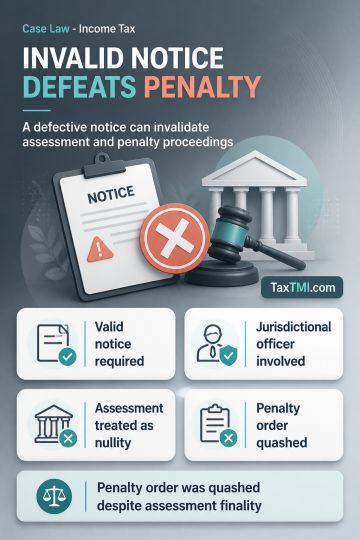
The Appellate Tribunal addressed the issue of penalty u/s 271(1)(c) concerning the correct classification of income. The Assessing Officer treated the income as 'income from house property' instead of 'business income', disallowing deductions. The Tribunal noted that in a previous assessment year, the same income was accepted as 'business income'. The AO's imposition of penalty for furnishing inaccurate particulars was deemed unjustified, citing legal precedents. The Tribunal emphasized that a mere unsustainable claim does not warrant penalty unless there is deliberate misinformation. The Tribunal ruled in favor of the assessee, highlighting that the recovery from the tenant exceeded the agreed rent. Not appealing disallowances does not automatically attract penalty, as penalty proceedings are separate. The assessee has the right to contest and prove no concealment of income, thereby negating penalty u/s 271(1)(c).
The Appellate Tribunal addressed the issue of penalty u/s 271(1)(c) concerning the correct classification of income. The Assessing Officer treated the income as 'income from house property' instead of 'business income', disallowing deductions. The Tribunal noted that in a previous assessment year, the same income was accepted as 'business income'. The AO's imposition of penalty for furnishing inaccurate particulars was deemed unjustified, citing legal precedents. The Tribunal emphasized that a mere unsustainable claim does not warrant penalty unless there is deliberate misinformation. The Tribunal ruled in favor of the assessee, highlighting that the recovery from the tenant exceeded the agreed rent. Not appealing disallowances does not automatically attract penalty, as penalty proceedings are separate. The assessee has the right to contest and prove no concealment of income, thereby negating penalty u/s 271(1)(c).
Note: It is a system-generated summary and is for quick reference only.
 TaxTMI
  TaxTMI
 of 4828















 Join Channel