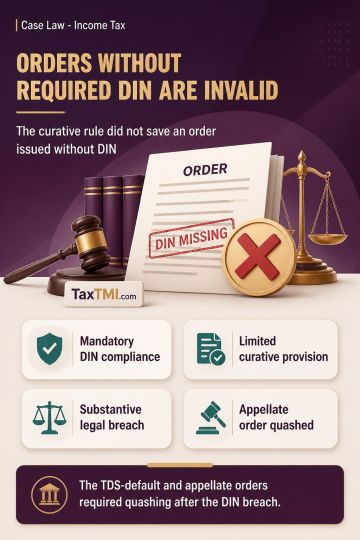
Document Identification Number compliance renders TDS-default orders invalid where mandatory DIN requirements are breached and curative provision does...
The National Company Law Appellate Tribunal (NCLAT) considered the approval of a resolution plan by the Successful Resolution Applicant (SRA), focusing on valuation processes and compliance with Section 29-A(f) of the Insolvency and Bankruptcy Code. The appellant's claims of irregularities in valuation and alleged ban by SEBI on SRA's promoters were deemed unsubstantiated. The Tribunal emphasized that the Committee of Creditors' (CoC) decision to approve the plan, supported by 100% voting share, is a commercial decision not subject to judicial interference unless noncompliance with Section 30(2) of IBC is proven. The Adjudicating Authority's approval of the plan and rejection of the appellant's objections were upheld, leading to the dismissal of the appeal.
The National Company Law Appellate Tribunal (NCLAT) considered the approval of a resolution plan by the Successful Resolution Applicant (SRA), focusing on valuation processes and compliance with Section 29-A(f) of the Insolvency and Bankruptcy Code. The appellant's claims of irregularities in valuation and alleged ban by SEBI on SRA's promoters were deemed unsubstantiated. The Tribunal emphasized that the Committee of Creditors' (CoC) decision to approve the plan, supported by 100% voting share, is a commercial decision not subject to judicial interference unless noncompliance with Section 30(2) of IBC is proven. The Adjudicating Authority's approval of the plan and rejection of the appellant's objections were upheld, leading to the dismissal of the appeal.
Note: It is a system-generated summary and is for quick reference only.
 TaxTMI
  TaxTMI
 of 4918