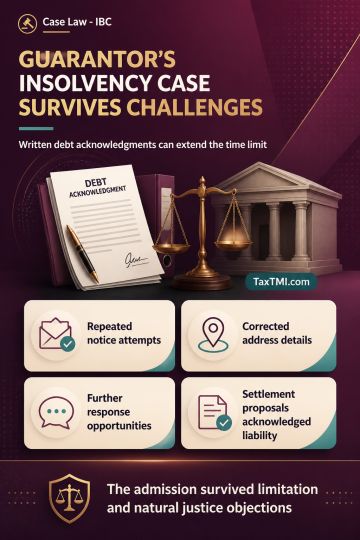
Service of notice and contractual debt acknowledgment preserved insolvency admission against a corporate guarantor despite limitation and natural just...
Original works exemption excludes standalone boulder transportation, leaving subcontracted railway-project transport services subject to service tax l...
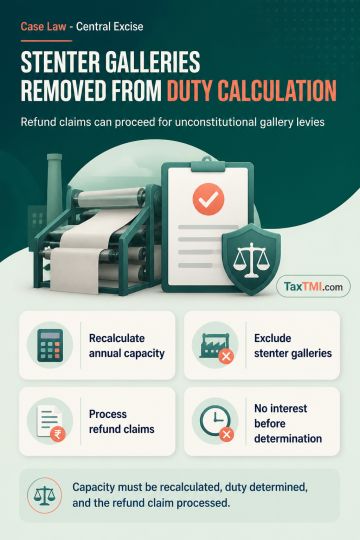
Annual production capacity determinations excluding stenter galleries support refunds for unconstitutional excise levies without an unjust-enrichment ...
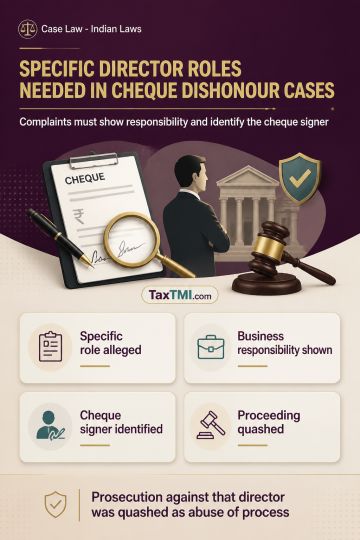
Vicarious liability for cheque dishonour requires specific allegations of responsibility and cheque signatory; generic director allegations cannot sus...
IT Resilience Index requires market infrastructure institutions to automate resilience scoring, early warnings, and continuous service-delivery monito...
The High Court held that prosecution u/ss 276C, 277, 278B, and 278E for tax evasion was invalid as it violated CBDT guidelines. Prosecution was premature without the penalty confirmed by ITAT, against the instructions. The CBDT policy requires processing for prosecution only after a penalty exceeding Rs. 50,000 is confirmed. As the ITAT set aside the penalty, prosecution was deemed unwarranted. Mens rea is essential for prosecution, and since ITAT deleted the penalty, continuing prosecution was unjust. The Supreme Court precedent establishes that penalty and prosecution go together; when penalty is deleted, prosecution cannot proceed. With no appeal filed against the ITAT order, prosecution was barred by finality. Following a SC ruling, exoneration in departmental proceedings leads to the failure of criminal prosecution. Petitions were allowed.
The High Court held that prosecution u/ss 276C, 277, 278B, and 278E for tax evasion was invalid as it violated CBDT guidelines. Prosecution was premature without the penalty confirmed by ITAT, against the instructions. The CBDT policy requires processing for prosecution only after a penalty exceeding Rs. 50,000 is confirmed. As the ITAT set aside the penalty, prosecution was deemed unwarranted. Mens rea is essential for prosecution, and since ITAT deleted the penalty, continuing prosecution was unjust. The Supreme Court precedent establishes that penalty and prosecution go together; when penalty is deleted, prosecution cannot proceed. With no appeal filed against the ITAT order, prosecution was barred by finality. Following a SC ruling, exoneration in departmental proceedings leads to the failure of criminal prosecution. Petitions were allowed.
Note: It is a system-generated summary and is for quick reference only.
 TaxTMI
  TaxTMI
 of 4828













 Join Channel