Approved resolution plans extinguish unsubmitted pre-approval tax claims, preventing later recovery outside the insolvency process and preserving a cl...
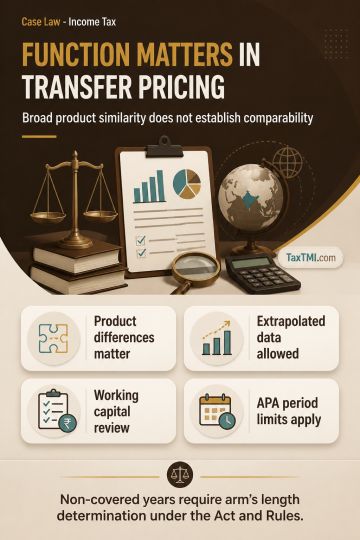
Transfer pricing comparability requires functional alignment and permits working capital adjustment, while APA margins cannot govern non-covered years...
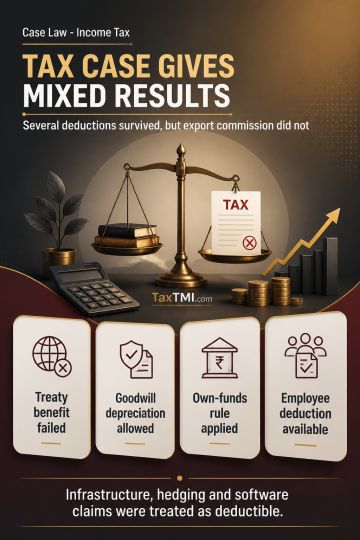
Treaty benefit, goodwill depreciation and hedging costs: export commission disallowed, while key business deductions and depreciation claims succeeded...
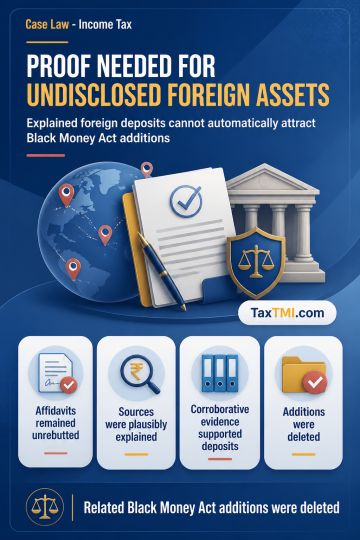
Undisclosed foreign asset classification requires an unexplained source; unrebutted affidavits and corroborative evidence defeated the Black Money Act...
The High Court considered the maintainability of a refund claim regarding GST on health care services. The court noted the principle of unjust enrichment and the availability of alternative remedies like appeal u/s 107 of the Act. It emphasized that the power of writs under Article 226 is discretionary, with the existence of an alternative remedy generally barring its use. The court found that the petitioners had not shown the orders to be without jurisdiction, nor challenged the legislation's validity. Therefore, the court dismissed the petition, stating that the petitioners had an alternative efficacious remedy through the statutory appeal process.
The High Court considered the maintainability of a refund claim regarding GST on health care services. The court noted the principle of unjust enrichment and the availability of alternative remedies like appeal u/s 107 of the Act. It emphasized that the power of writs under Article 226 is discretionary, with the existence of an alternative remedy generally barring its use. The court found that the petitioners had not shown the orders to be without jurisdiction, nor challenged the legislation's validity. Therefore, the court dismissed the petition, stating that the petitioners had an alternative efficacious remedy through the statutory appeal process.
Note: It is a system-generated summary and is for quick reference only.
 TaxTMI
 of 4803







 Join Channel


 TaxTMI