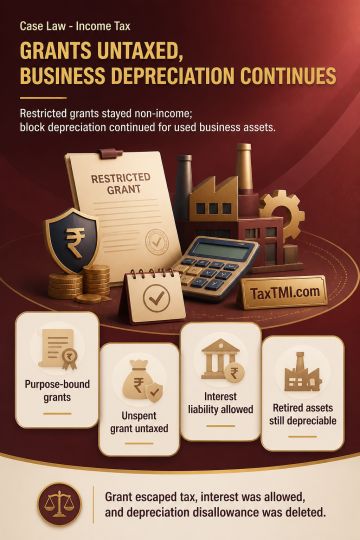
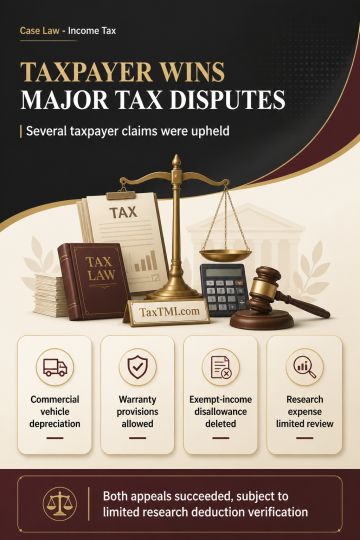
Commercial vehicle depreciation, scientifically determined warranty provisions and exempt-income disallowances were resolved in favour of the taxpayer...
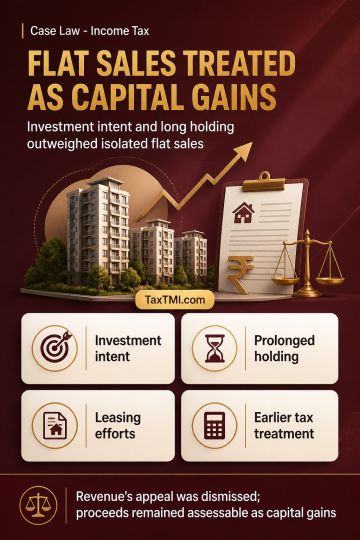
Inherited property sale proceeds require capital-gains treatment where ownership is supported by evidence, not suspicion or unverified signature doubt...
Cross-examination of retracted statements is essential where foundational evidence supports a benami allegation and documented funding explanations re...
Capital-goods exemption covers plant-modernisation accessories, while the import restriction applies only to earlier capital-goods components and spar...
The High Court considered the maintainability of a refund claim regarding GST on health care services. The court noted the principle of unjust enrichment and the availability of alternative remedies like appeal u/s 107 of the Act. It emphasized that the power of writs under Article 226 is discretionary, with the existence of an alternative remedy generally barring its use. The court found that the petitioners had not shown the orders to be without jurisdiction, nor challenged the legislation's validity. Therefore, the court dismissed the petition, stating that the petitioners had an alternative efficacious remedy through the statutory appeal process.
The High Court considered the maintainability of a refund claim regarding GST on health care services. The court noted the principle of unjust enrichment and the availability of alternative remedies like appeal u/s 107 of the Act. It emphasized that the power of writs under Article 226 is discretionary, with the existence of an alternative remedy generally barring its use. The court found that the petitioners had not shown the orders to be without jurisdiction, nor challenged the legislation's validity. Therefore, the court dismissed the petition, stating that the petitioners had an alternative efficacious remedy through the statutory appeal process.
Note: It is a system-generated summary and is for quick reference only.
 TaxTMI
 of 4801






 Join Channel


 TaxTMI