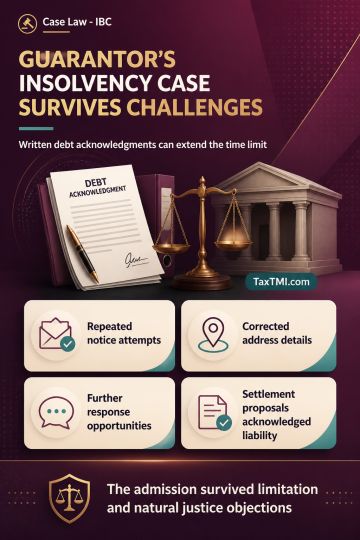
Service of notice and contractual debt acknowledgment preserved insolvency admission against a corporate guarantor despite limitation and natural just...
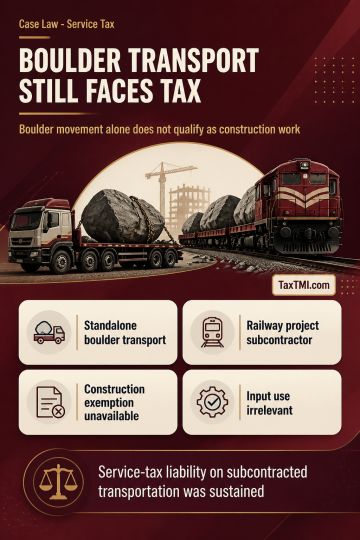
Original works exemption excludes standalone boulder transportation, leaving subcontracted railway-project transport services subject to service tax l...
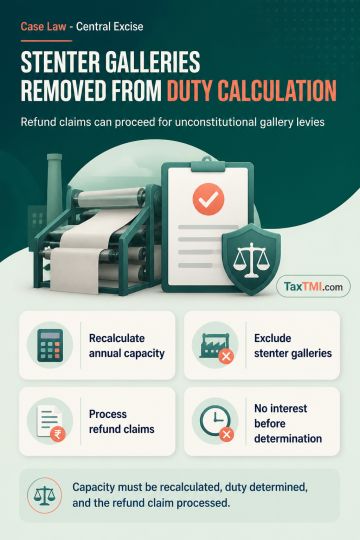
Annual production capacity determinations excluding stenter galleries support refunds for unconstitutional excise levies without an unjust-enrichment ...
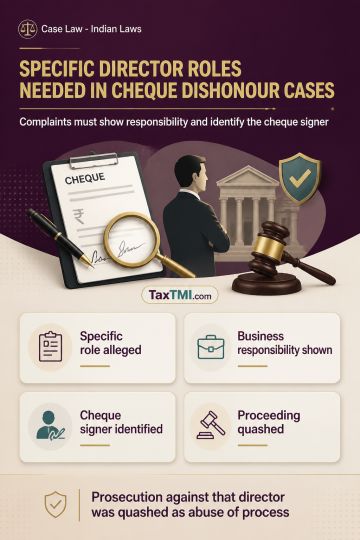
Vicarious liability for cheque dishonour requires specific allegations of responsibility and cheque signatory; generic director allegations cannot sus...
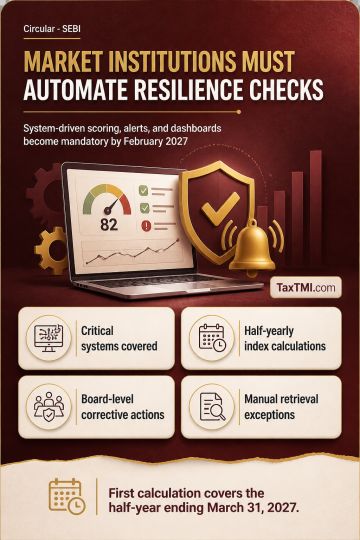
IT Resilience Index requires market infrastructure institutions to automate resilience scoring, early warnings, and continuous service-delivery monito...
The Appellate Tribunal addressed issues related to assessment u/ss 153A and 153C, emphasizing the necessity of incriminating material for additions. Following legal precedents, the Tribunal held that in the absence of such material, additions made by the Assessing Officer in an unabated assessment must be quashed. Additionally, the Tribunal ruled against an addition u/s 69C for bogus purchases, noting the capital nature of the expenditure and the purchases' relevance to a different financial year. It further clarified that sections 68 and 69C were inapplicable as the case pertained to expenditure, not unexplained credits. The Tribunal criticized the CIT(A) for broadening the charge without providing the assessee an opportunity to respond, leading to the allowance of the assessee's appeal.
The Appellate Tribunal addressed issues related to assessment u/ss 153A and 153C, emphasizing the necessity of incriminating material for additions. Following legal precedents, the Tribunal held that in the absence of such material, additions made by the Assessing Officer in an unabated assessment must be quashed. Additionally, the Tribunal ruled against an addition u/s 69C for bogus purchases, noting the capital nature of the expenditure and the purchases' relevance to a different financial year. It further clarified that sections 68 and 69C were inapplicable as the case pertained to expenditure, not unexplained credits. The Tribunal criticized the CIT(A) for broadening the charge without providing the assessee an opportunity to respond, leading to the allowance of the assessee's appeal.
Note: It is a system-generated summary and is for quick reference only.
 TaxTMI
  TaxTMI
 of 4828








 Join Channel