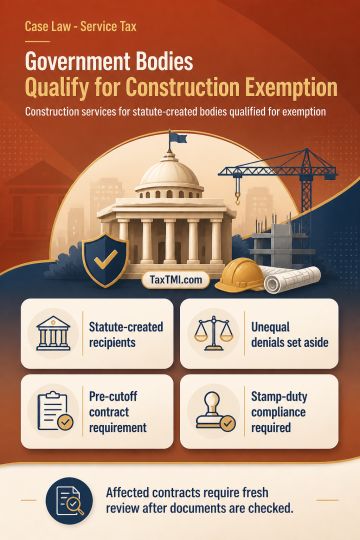
Governmental authority status supports construction-service exemption, while pre-cutoff contract and stamp-duty compliance requires verification on re...
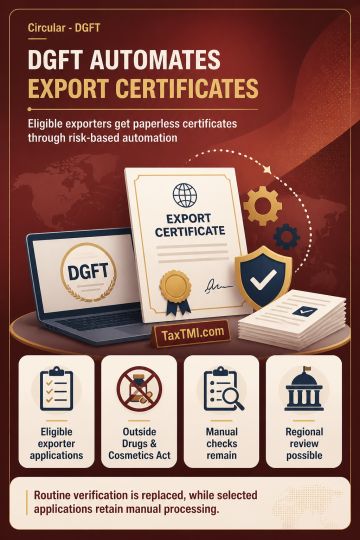
Automated Free Sale and Commerce Certificates enable paperless processing while retaining risk-based manual verification for selected exporter applica...
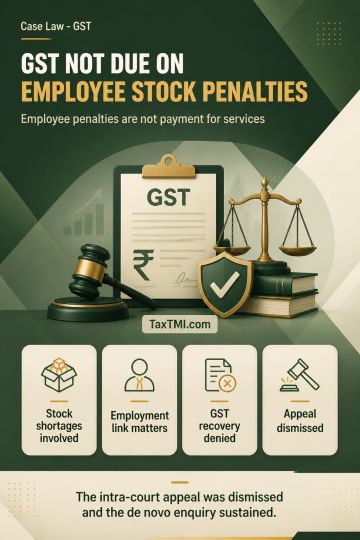
Employee stock-shortage penalties do not constitute consideration for services, preventing GST collection under Schedule II in employment relationship...
The case involved a dispute regarding the valuation of goods for central excise duty purposes. The Appellate Tribunal held that the price declared by the appellant for the sale of finished goods to a related entity should be considered as the 'Transaction Value' for excise duty calculation, without the need to resort to specific valuation rules. The Tribunal also noted that the appellant was entitled to a duty refund under a notification and had not undervalued the goods sold. It further ruled that there was no suppression of facts justifying an extended period for raising demands. Consequently, the demand for duty was deemed unsustainable, leading to the allowance of the appeal without any imposition of interest or penalties.
The case involved a dispute regarding the valuation of goods for central excise duty purposes. The Appellate Tribunal held that the price declared by the appellant for the sale of finished goods to a related entity should be considered as the 'Transaction Value' for excise duty calculation, without the need to resort to specific valuation rules. The Tribunal also noted that the appellant was entitled to a duty refund under a notification and had not undervalued the goods sold. It further ruled that there was no suppression of facts justifying an extended period for raising demands. Consequently, the demand for duty was deemed unsustainable, leading to the allowance of the appeal without any imposition of interest or penalties.
Note: It is a system-generated summary and is for quick reference only.
 TaxTMI
  TaxTMI
 of 4828




 Join Channel


