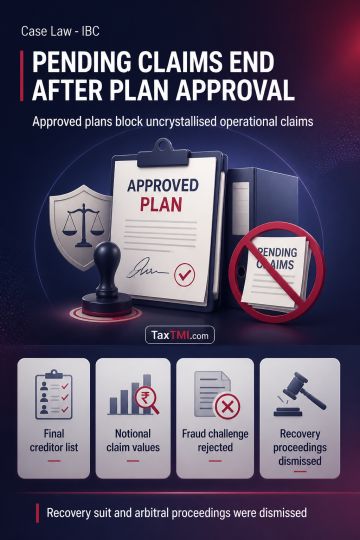
Clean slate principle extinguishes uncrystallised operational claims and bars continuation of pending recovery and arbitral proceedings after plan app...
Works contract classification governs composite layout-development contracts where VAT-paid goods are transferred alongside construction and infrastru...
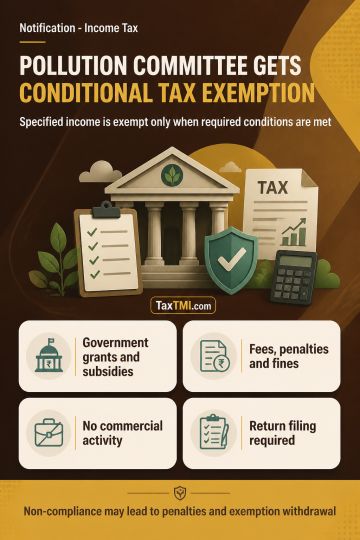
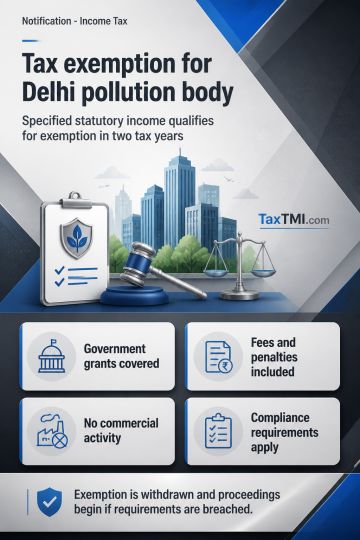
Specified income tax exemption for pollution control body remains conditional on non-commercial activity, unchanged income character, and return filin...
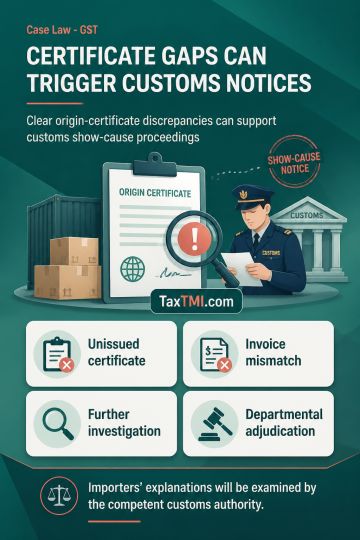
Jurisdictional facts in certificate-of-origin discrepancies can support customs show-cause proceedings, leaving factual explanations for departmental ...
The High Court considered the maintainability of a review petition based on a subsequent judgment and the condonation of a 619-day delay in filing the civil review petition. The appellant attributed the delay to the Counsel's actions. The main issue was the entitlement of exemption u/s 80-P(2)(a)(i) and the taxability of transfer charges received by the Samiti. The Court referred to a Supreme Court decision regarding the nature of transfer charges. The Court held that a decision based on a question of law, if subsequently reversed or modified by a superior court, does not form grounds for review. The Court noted a split verdict in another Supreme Court case. The Court emphasized that entertaining a review petition ignoring statutory provisions would create uncertainty. Consequently, the appeal for condonation of the delay in filing the civil review petition was dismissed.
The High Court considered the maintainability of a review petition based on a subsequent judgment and the condonation of a 619-day delay in filing the civil review petition. The appellant attributed the delay to the Counsel's actions. The main issue was the entitlement of exemption u/s 80-P(2)(a)(i) and the taxability of transfer charges received by the Samiti. The Court referred to a Supreme Court decision regarding the nature of transfer charges. The Court held that a decision based on a question of law, if subsequently reversed or modified by a superior court, does not form grounds for review. The Court noted a split verdict in another Supreme Court case. The Court emphasized that entertaining a review petition ignoring statutory provisions would create uncertainty. Consequently, the appeal for condonation of the delay in filing the civil review petition was dismissed.
Note: It is a system-generated summary and is for quick reference only.
 TaxTMI
 of 4792






 Join Channel


 TaxTMI