Retention of seized property survives where recorded reasons support proceeds of crime, while stayed investigation periods are excluded from limitatio...
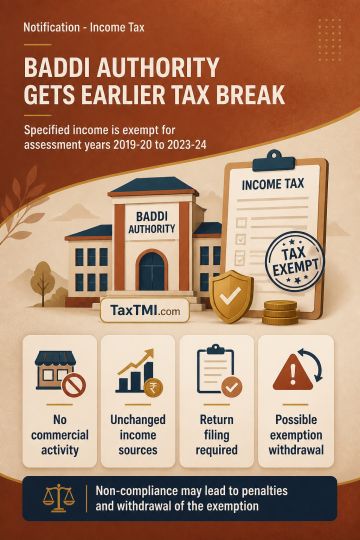
Specified income of Baddi Barotiwala Nalagarh Development Authority receives conditional tax exemption, retrospectively covering its designated assess...
Specified development authority income receives retrospective tax exemption, subject to non-commercial activity, unchanged income sources, and return-...
Unified Brand India framework introduces voluntary Trust Mark certification and funding support for export branding, packaging and global promotional ...
Origin Declaration authentication governs preferential tariff claims under India-UK CETA, requiring a validated reference number before import clearan...
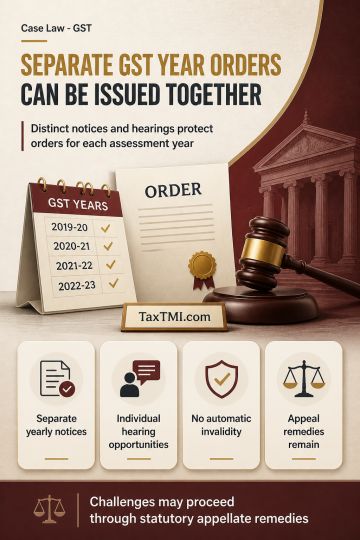
Separate assessment orders for different years remain valid when distinct notices and hearing opportunities prevent prejudice from combined proceeding...
The case involves the retrospective application of the safe harbor limit of 5% u/s 50C of the Income Tax Act, which addresses the difference between sale consideration and market value. The Tribunal held that the amendment introducing the safe harbor limit was curative of unintended consequences of anti-avoidance provisions. The CBDT recognized genuine variances in property values based on factors like location and facilities. The safe harbor limit was initially introduced in 2018 and enhanced in 2020, with the Tribunal ruling the 2020 amendment to apply retrospectively. Citing precedent, the Tribunal deemed the amendment retrospective to prevent unintended consequences, granting the assessee the benefit of section 50C and setting aside the addition.
The case involves the retrospective application of the safe harbor limit of 5% u/s 50C of the Income Tax Act, which addresses the difference between sale consideration and market value. The Tribunal held that the amendment introducing the safe harbor limit was curative of unintended consequences of anti-avoidance provisions. The CBDT recognized genuine variances in property values based on factors like location and facilities. The safe harbor limit was initially introduced in 2018 and enhanced in 2020, with the Tribunal ruling the 2020 amendment to apply retrospectively. Citing precedent, the Tribunal deemed the amendment retrospective to prevent unintended consequences, granting the assessee the benefit of section 50C and setting aside the addition.
Note: It is a system-generated summary and is for quick reference only.
 TaxTMI
 of 4801













 Join Channel


 TaxTMI