Necessary-party requirements limit impleadment of independent entities, while deferred consideration does not create an appealable adverse determinati...
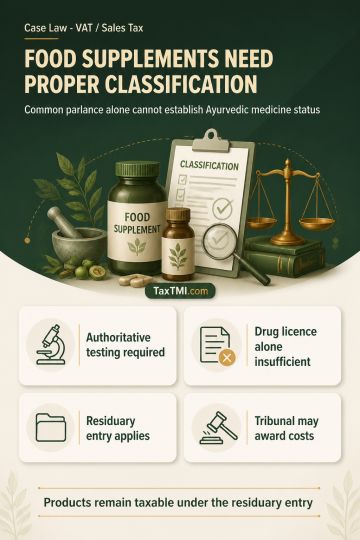
Food supplement classification requires common parlance and authoritative tests, preventing treatment as proprietary Ayurvedic medicines without suppo...
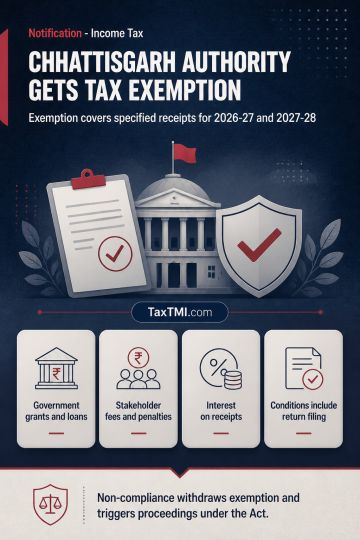
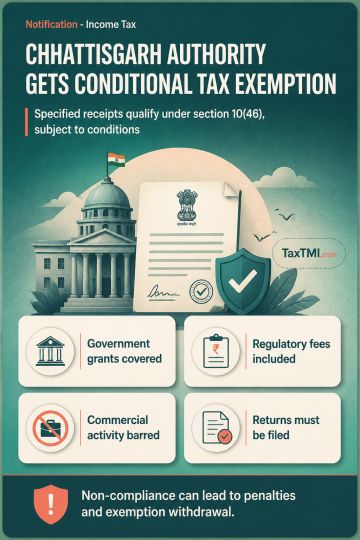
Specified regulatory authority income receives conditional tax exemption, subject to non-commercial activity, unchanged income character, and return f...
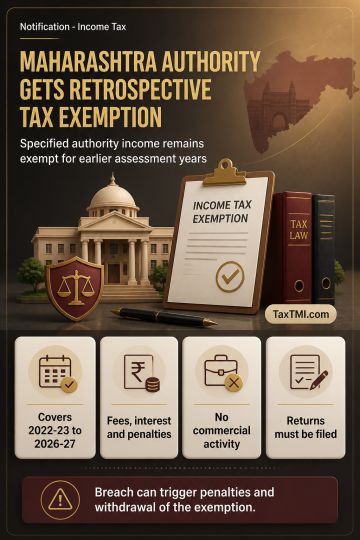
Tax exemption for regulatory authority income applies retrospectively, subject to non-commercial activity, unchanged income sources, and return-filing...
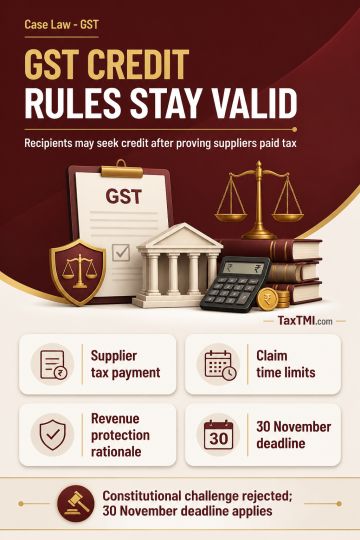
Input tax credit conditions remain constitutionally valid, with eligible recipient claims considered under GST circulars and retrospective filing dead...
The Appellate Tribunal considered a case involving a revision u/s 263, where the Commissioner contended that the Assessing Officer did not adequately inquire into Long Term Capital Gain Exemptions u/s 54. The Tribunal found that the Assessing Officer had indeed examined the deduction u/s 54 and addressed the concerns raised, ultimately allowing the claim. The Commissioner did not identify any specific errors in the AO's actions, merely suggesting a need for further investigation without pinpointing any missed inquiries. The Tribunal concluded that the AO had taken a reasonable view during assessment, with no demonstrated errors by the revenue. As none of the conditions for revision u/s 263 were met, the order was not deemed erroneous or prejudicial to revenue, resulting in the appeal by the assessee being allowed.
The Appellate Tribunal considered a case involving a revision u/s 263, where the Commissioner contended that the Assessing Officer did not adequately inquire into Long Term Capital Gain Exemptions u/s 54. The Tribunal found that the Assessing Officer had indeed examined the deduction u/s 54 and addressed the concerns raised, ultimately allowing the claim. The Commissioner did not identify any specific errors in the AO's actions, merely suggesting a need for further investigation without pinpointing any missed inquiries. The Tribunal concluded that the AO had taken a reasonable view during assessment, with no demonstrated errors by the revenue. As none of the conditions for revision u/s 263 were met, the order was not deemed erroneous or prejudicial to revenue, resulting in the appeal by the assessee being allowed.
Note: It is a system-generated summary and is for quick reference only.
 TaxTMI
 of 4784





 Join Channel


 TaxTMI