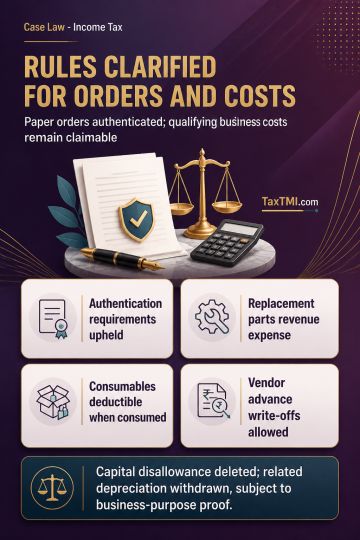
Authentication of paper assessment orders upheld, while qualifying repairs, consumables and vendor advance write-offs remain deductible business claim...
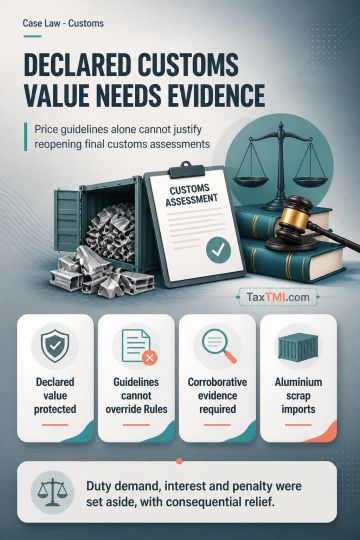
Transaction value cannot be rejected solely on non-statutory valuation guidelines without corroborative evidence supporting reassessment of final cust...
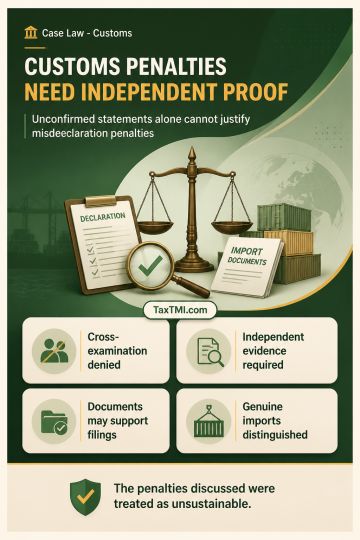
Cross-examination rights and corroborated evidence limit customs penalties for misdeclaration in genuine import transactions involving documented clea...
Page of 4782
Press 'Enter' after typing page number.
301 to 320 of 95636 Results
❮
❯
❯❯
0 / 200
Expand Note
Add to Folder
No Folders have been created
+
Are you sure you want to delete "My most important" ?
The Appellate Tribunal considered a case involving a revision u/s 263, where the Commissioner contended that the Assessing Officer did not adequately inquire into Long Term Capital Gain Exemptions u/s 54. The Tribunal found that the Assessing Officer had indeed examined the deduction u/s 54 and addressed the concerns raised, ultimately allowing the claim. The Commissioner did not identify any specific errors in the AO's actions, merely suggesting a need for further investigation without pinpointing any missed inquiries. The Tribunal concluded that the AO had taken a reasonable view during assessment, with no demonstrated errors by the revenue. As none of the conditions for revision u/s 263 were met, the order was not deemed erroneous or prejudicial to revenue, resulting in the appeal by the assessee being allowed.
The Appellate Tribunal considered a case involving a revision u/s 263, where the Commissioner contended that the Assessing Officer did not adequately inquire into Long Term Capital Gain Exemptions u/s 54. The Tribunal found that the Assessing Officer had indeed examined the deduction u/s 54 and addressed the concerns raised, ultimately allowing the claim. The Commissioner did not identify any specific errors in the AO's actions, merely suggesting a need for further investigation without pinpointing any missed inquiries. The Tribunal concluded that the AO had taken a reasonable view during assessment, with no demonstrated errors by the revenue. As none of the conditions for revision u/s 263 were met, the order was not deemed erroneous or prejudicial to revenue, resulting in the appeal by the assessee being allowed.
Note: It is a system-generated summary and is for quick reference only.
 TaxTMI
 of 4782









 Join Channel


 TaxTMI