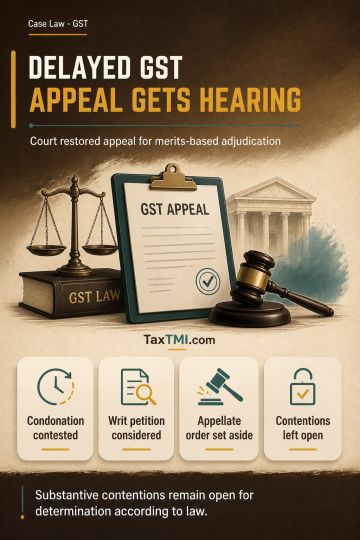
Necessary-party requirements limit impleadment of independent entities, while deferred consideration does not create an appealable adverse determinati...
Food supplement classification requires common parlance and authoritative tests, preventing treatment as proprietary Ayurvedic medicines without suppo...
Specified regulatory authority income receives conditional tax exemption, subject to non-commercial activity, unchanged income character, and return f...
Tax exemption for regulatory authority income applies retrospectively, subject to non-commercial activity, unchanged income sources, and return-filing...
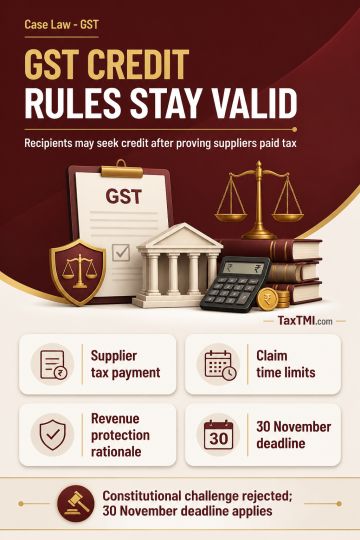
Input tax credit conditions remain constitutionally valid, with eligible recipient claims considered under GST circulars and retrospective filing dead...
The Appellate Tribunal considered the disallowance of interest paid on a loan from Hyderabad Mutual Benefit Society. The Tribunal found that the documents certifying the loan were not available to the Assessing Officer before the assessment order. The Tribunal directed the assessee to file an application for admission of additional evidence. Regarding the disallowed expenditure on livestock, the Tribunal held that livestock is not a capital asset, and thus, the expenditure cannot be capitalized. The Tribunal dismissed the appeal on this ground. Additionally, the Tribunal determined that the profit on the sale of livestock should be treated as business income, not capital gain, as livestock is considered stock-in-trade. The Tribunal remanded the issue of computing total income from the purchase of livestock to the Assessing Officer for further verification.
The Appellate Tribunal considered the disallowance of interest paid on a loan from Hyderabad Mutual Benefit Society. The Tribunal found that the documents certifying the loan were not available to the Assessing Officer before the assessment order. The Tribunal directed the assessee to file an application for admission of additional evidence. Regarding the disallowed expenditure on livestock, the Tribunal held that livestock is not a capital asset, and thus, the expenditure cannot be capitalized. The Tribunal dismissed the appeal on this ground. Additionally, the Tribunal determined that the profit on the sale of livestock should be treated as business income, not capital gain, as livestock is considered stock-in-trade. The Tribunal remanded the issue of computing total income from the purchase of livestock to the Assessing Officer for further verification.
Note: It is a system-generated summary and is for quick reference only.
 TaxTMI
 of 4792



















 Join Channel


 TaxTMI