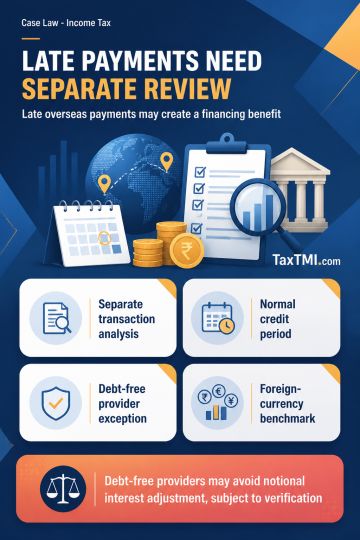
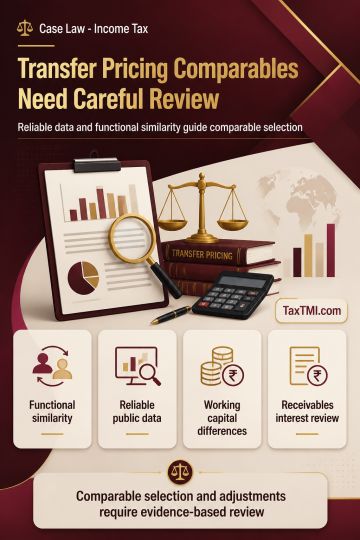
Transfer pricing comparability requires functional alignment, reliable financial data, and careful review of working capital and receivables adjustmen...
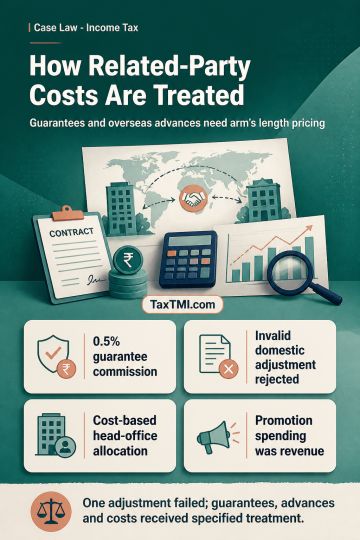
Transfer pricing rules require benchmarking corporate guarantees and associated-enterprise advances, while invalid domestic-transaction adjustments ca...
Prospective sugar export prohibition required registered letters of credit; private contracts and export quotas created no enforceable continuation ri...
Retroactive interim-moratorium exclusion permits protective asset disclosure and preservation measures against personal guarantors pending arbitration...
The Appellate Tribunal considered the disallowance of interest paid on a loan from Hyderabad Mutual Benefit Society. The Tribunal found that the documents certifying the loan were not available to the Assessing Officer before the assessment order. The Tribunal directed the assessee to file an application for admission of additional evidence. Regarding the disallowed expenditure on livestock, the Tribunal held that livestock is not a capital asset, and thus, the expenditure cannot be capitalized. The Tribunal dismissed the appeal on this ground. Additionally, the Tribunal determined that the profit on the sale of livestock should be treated as business income, not capital gain, as livestock is considered stock-in-trade. The Tribunal remanded the issue of computing total income from the purchase of livestock to the Assessing Officer for further verification.
The Appellate Tribunal considered the disallowance of interest paid on a loan from Hyderabad Mutual Benefit Society. The Tribunal found that the documents certifying the loan were not available to the Assessing Officer before the assessment order. The Tribunal directed the assessee to file an application for admission of additional evidence. Regarding the disallowed expenditure on livestock, the Tribunal held that livestock is not a capital asset, and thus, the expenditure cannot be capitalized. The Tribunal dismissed the appeal on this ground. Additionally, the Tribunal determined that the profit on the sale of livestock should be treated as business income, not capital gain, as livestock is considered stock-in-trade. The Tribunal remanded the issue of computing total income from the purchase of livestock to the Assessing Officer for further verification.
Note: It is a system-generated summary and is for quick reference only.
 TaxTMI
 of 4786








 Join Channel


 TaxTMI
