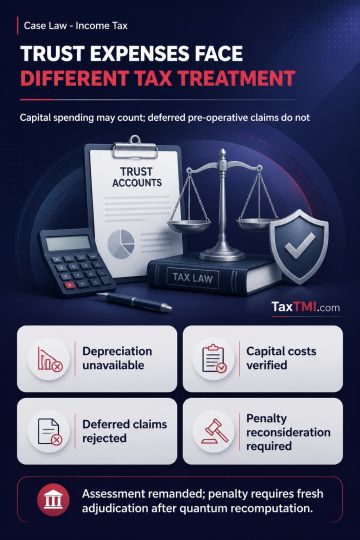
Charitable trust income application permits verified capital expenditure but rejects deferred pre-operative claims and requires reconsideration of con...
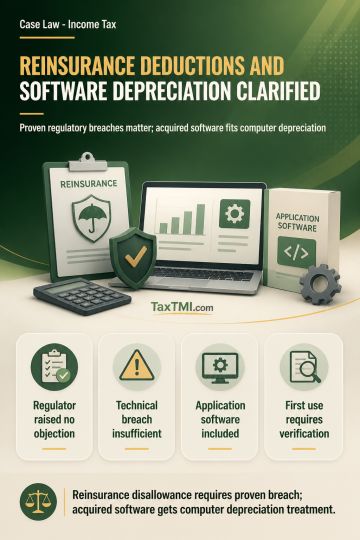
Reinsurance premium deductions require established regulatory breaches, while independently acquired software qualifies within the computer depreciati...
Rectification of mistake remains limited to self-evident record errors, preventing merits review through miscellaneous applications and preserving fin...
Tender creditworthiness conditions may extend to de facto Promoter Directors, with post-participation challenges generally barred absent arbitrariness...
Corporate representation in PMLA summons proceedings permitted through an authorised signatory, subject to directors' continuing cooperation and atten...
The ITAT, an Appellate Tribunal, ruled on unexplained cash deposits in bank accounts opened by a CA misusing KYC documents. The CA, acting fraudulently, used the taxpayer's ID to open accounts, obtain loans, and acquire properties. Following a Rs. 2000 cr fraud discovery, involving multiple arrests, it was found that the CA was the mastermind. The Tribunal held that the additions to the taxpayer's account were unjustified, as the CA was responsible for the transactions. The AO failed to verify key forms and neglected to summon relevant parties. The taxpayer successfully demonstrated that the accounts were not theirs, leading to a decision in their favor. The cash deposits were attributed to the CA, exonerating the taxpayer.
The ITAT, an Appellate Tribunal, ruled on unexplained cash deposits in bank accounts opened by a CA misusing KYC documents. The CA, acting fraudulently, used the taxpayer's ID to open accounts, obtain loans, and acquire properties. Following a Rs. 2000 cr fraud discovery, involving multiple arrests, it was found that the CA was the mastermind. The Tribunal held that the additions to the taxpayer's account were unjustified, as the CA was responsible for the transactions. The AO failed to verify key forms and neglected to summon relevant parties. The taxpayer successfully demonstrated that the accounts were not theirs, leading to a decision in their favor. The cash deposits were attributed to the CA, exonerating the taxpayer.
Note: It is a system-generated summary and is for quick reference only.
 TaxTMI
 of 4805












 Join Channel


 TaxTMI
