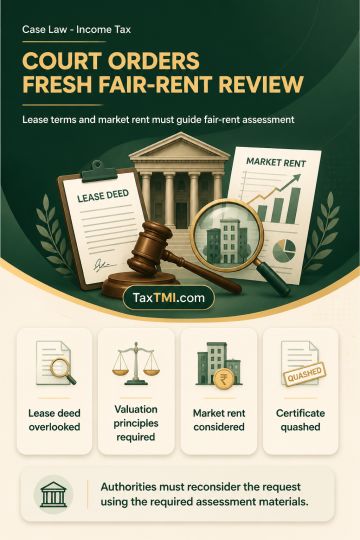
Fair-rent assessment requires consideration of lease terms, valuation principles and prevailing market rent; the certificate was quashed for fresh rev...
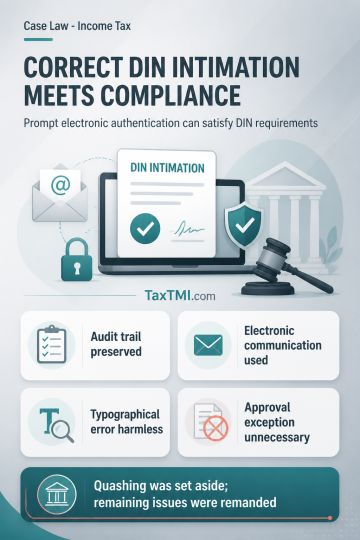
Document Identification Number compliance is satisfied when electronically communicated orders are promptly authenticated through a correctly identifi...
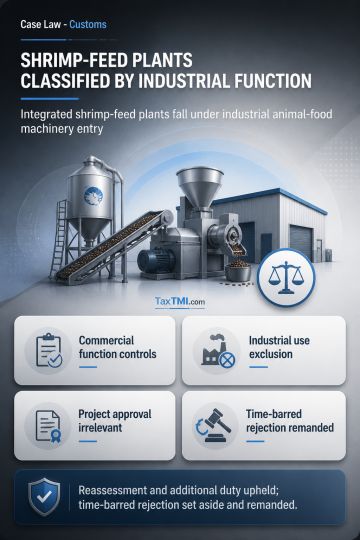
Industrial shrimp-feed machinery classification follows its commercial function, placing integrated production plants under the specific industrial fo...
The Appellate Tribunal considered a case involving the revision u/s 263 of the Act regarding the allowability of deduction of interest claimed u/s 57. The Tribunal held that the Assessing Officer's order finalized under limited scrutiny, after considering all relevant facts and in conformity with CBDT instructions, was not erroneous or prejudicial to Revenue. It was established that the Principal Commissioner of Income Tax exceeded jurisdiction by directing a fresh assessment beyond the issues covered under limited scrutiny. The Tribunal emphasized that the power of revision u/s 263 is confined to issues considered in the limited scrutiny assessment. Therefore, the Tribunal allowed the appeal of the assessee, as the PCIT's assertion that certain issues were not verified by the AO in the limited scrutiny assessment was not legally sustainable.
The Appellate Tribunal considered a case involving the revision u/s 263 of the Act regarding the allowability of deduction of interest claimed u/s 57. The Tribunal held that the Assessing Officer's order finalized under limited scrutiny, after considering all relevant facts and in conformity with CBDT instructions, was not erroneous or prejudicial to Revenue. It was established that the Principal Commissioner of Income Tax exceeded jurisdiction by directing a fresh assessment beyond the issues covered under limited scrutiny. The Tribunal emphasized that the power of revision u/s 263 is confined to issues considered in the limited scrutiny assessment. Therefore, the Tribunal allowed the appeal of the assessee, as the PCIT's assertion that certain issues were not verified by the AO in the limited scrutiny assessment was not legally sustainable.
Note: It is a system-generated summary and is for quick reference only.
 TaxTMI
 of 4800




 Join Channel


 TaxTMI
