Transaction value rejection requires reliable corroboration; refundable VAT is excluded and temporary registration does not defeat new-vehicle exempti...
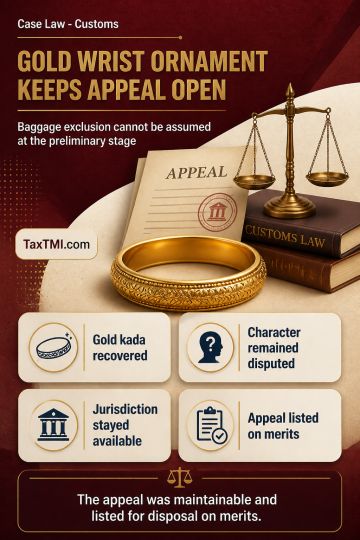
Appellate jurisdiction remains available where a wrist-worn gold ornament cannot conclusively be characterised as imported baggage at the preliminary ...
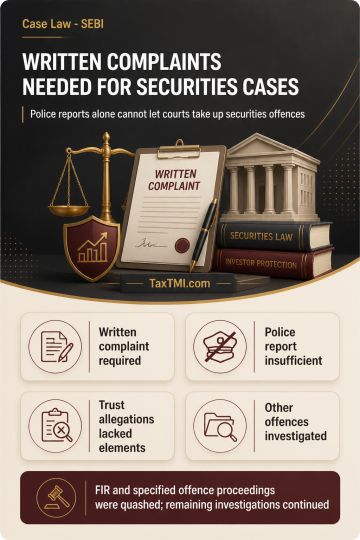
Written complaint requirement bars cognizance on police reports for securities offences, while unsupported breach of trust and cheating allegations fa...
Risk-based postal import clearance standardises electronic assessment, document requests, duty realisation and delivery controls at Foreign Post Offic...
Page of 4786
Press 'Enter' after typing page number.
61 to 80 of 95715 Results
❮
❯
❯❯
0 / 200
Expand Note
Add to Folder
No Folders have been created
+
Are you sure you want to delete "My most important" ?
The Appellate Tribunal considered a case involving the revision u/s 263 of the Act regarding the allowability of deduction of interest claimed u/s 57. The Tribunal held that the Assessing Officer's order finalized under limited scrutiny, after considering all relevant facts and in conformity with CBDT instructions, was not erroneous or prejudicial to Revenue. It was established that the Principal Commissioner of Income Tax exceeded jurisdiction by directing a fresh assessment beyond the issues covered under limited scrutiny. The Tribunal emphasized that the power of revision u/s 263 is confined to issues considered in the limited scrutiny assessment. Therefore, the Tribunal allowed the appeal of the assessee, as the PCIT's assertion that certain issues were not verified by the AO in the limited scrutiny assessment was not legally sustainable.
The Appellate Tribunal considered a case involving the revision u/s 263 of the Act regarding the allowability of deduction of interest claimed u/s 57. The Tribunal held that the Assessing Officer's order finalized under limited scrutiny, after considering all relevant facts and in conformity with CBDT instructions, was not erroneous or prejudicial to Revenue. It was established that the Principal Commissioner of Income Tax exceeded jurisdiction by directing a fresh assessment beyond the issues covered under limited scrutiny. The Tribunal emphasized that the power of revision u/s 263 is confined to issues considered in the limited scrutiny assessment. Therefore, the Tribunal allowed the appeal of the assessee, as the PCIT's assertion that certain issues were not verified by the AO in the limited scrutiny assessment was not legally sustainable.
Note: It is a system-generated summary and is for quick reference only.
 TaxTMI
 of 4786










 Join Channel


 TaxTMI