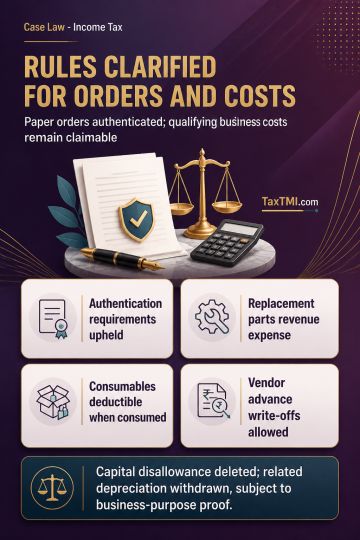
Authentication of paper assessment orders upheld, while qualifying repairs, consumables and vendor advance write-offs remain deductible business claim...
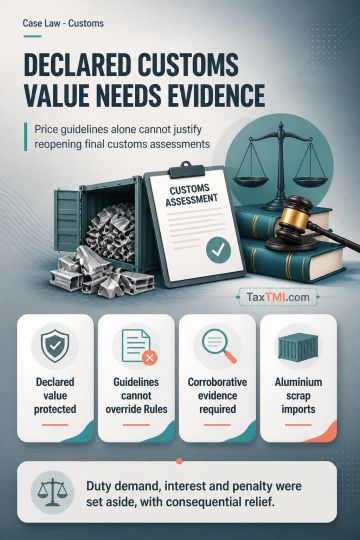
Transaction value cannot be rejected solely on non-statutory valuation guidelines without corroborative evidence supporting reassessment of final cust...
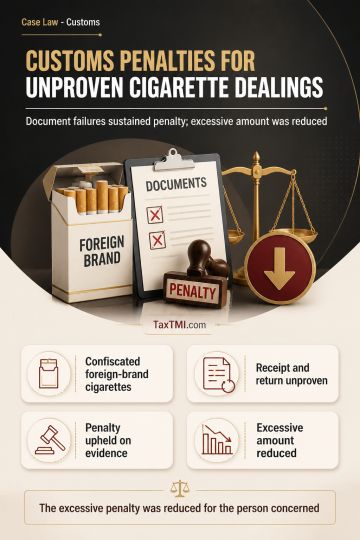
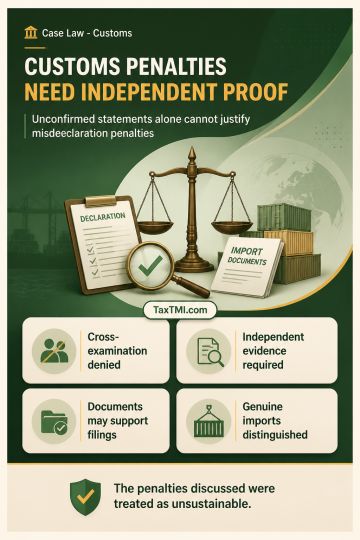
Cross-examination rights and corroborated evidence limit customs penalties for misdeclaration in genuine import transactions involving documented clea...
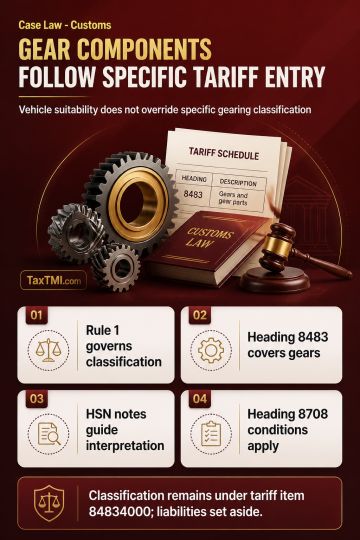
Tariff classification of vehicle gear components follows the specific gearing entry, displacing motor-vehicle parts classification and related liabili...
The Appellate Tribunal considered a case involving the revision u/s 263 of the Act regarding the allowability of deduction of interest claimed u/s 57. The Tribunal held that the Assessing Officer's order finalized under limited scrutiny, after considering all relevant facts and in conformity with CBDT instructions, was not erroneous or prejudicial to Revenue. It was established that the Principal Commissioner of Income Tax exceeded jurisdiction by directing a fresh assessment beyond the issues covered under limited scrutiny. The Tribunal emphasized that the power of revision u/s 263 is confined to issues considered in the limited scrutiny assessment. Therefore, the Tribunal allowed the appeal of the assessee, as the PCIT's assertion that certain issues were not verified by the AO in the limited scrutiny assessment was not legally sustainable.
The Appellate Tribunal considered a case involving the revision u/s 263 of the Act regarding the allowability of deduction of interest claimed u/s 57. The Tribunal held that the Assessing Officer's order finalized under limited scrutiny, after considering all relevant facts and in conformity with CBDT instructions, was not erroneous or prejudicial to Revenue. It was established that the Principal Commissioner of Income Tax exceeded jurisdiction by directing a fresh assessment beyond the issues covered under limited scrutiny. The Tribunal emphasized that the power of revision u/s 263 is confined to issues considered in the limited scrutiny assessment. Therefore, the Tribunal allowed the appeal of the assessee, as the PCIT's assertion that certain issues were not verified by the AO in the limited scrutiny assessment was not legally sustainable.
Note: It is a system-generated summary and is for quick reference only.
 TaxTMI
 of 4792







 Join Channel


 TaxTMI